

Bad Credit SUV Finance: Your Realistic Options Explained
Having bad credit doesn’t mean you can’t finance an SUV. It means the process looks a bit different. If you’ve been declined before, or you’re worried another application will make things worse, that hesitation is completely understandable. This guide isn’t about false promises. It’s about what’s realistically achievable. We’ll cover what bad credit SUV finance actually costs, which SUVs are within reach at different budget levels, and how to check your options without making your credit situation any worse. One thing worth saying upfront: Motorly’s initial eligibility check is a soft search. It won’t leave a mark on your credit file.
Can You Actually Finance an SUV With Bad Credit?
In many cases, yes. Bad credit makes finance harder, and in some situations it may mean a finance partner declines. But it doesn’t automatically close the door. Most finance partners don’t just look at a number. They look at the pattern behind it. A single CCJ from three years ago is treated very differently from a run of missed payments last month.
A few things worth understanding:
- Specialist finance partners look beyond the headline score.
Rather than running your application through a yes/no credit score threshold, many specialist finance partners look at your full picture: current income, employment stability, and whether your recent credit behaviour shows improvement. Over 40% of finance partners will still consider applications from people with imperfect credit histories. - HP is often easier to get approved than PCP.
With Hire Purchase, the car itself acts as security for the loan. You don’t own it until the final payment clears. This gives finance partners more confidence, which is why most specialist bad credit finance comes in HP form rather than PCP. - Things will look different to standard finance.
Expect a higher APR than someone with a clean credit history, possibly a larger deposit requirement, and some higher-value models may be out of reach. That’s honest, not discouraging. Choosing the right car at the right price point makes a significant difference.
The key thing: Motorly works with a panel of specialist finance partners who focus specifically on non-standard credit situations. That means your application gets matched to finance partners who are set up to help, rather than filtered out by mainstream criteria.
What Does Bad Credit SUV Finance Actually Cost?
This is where most guides get vague. They say rates “may be higher” without showing what that actually means on a monthly payment. Let’s be specific.
Here are worked examples using a used Nissan Qashqai at two price points, across three credit tiers:
| Credit tier | Car price | APR | Deposit | Monthly (48mo) | Total credit cost |
|---|---|---|---|---|---|
| Good credit | £15,000 | 8.9% | £1,000 | ~£340/mo | ~£1,320 |
| Fair credit | £15,000 | 15–18% | £1,000 | ~£380–£400/mo | ~£3,200–£4,200 |
| Poor credit | £15,000 | 25–35% | £1,500 | ~£420–£480/mo | ~£5,200–£8,000 |
| Poor credit (cheaper car) | £10,000 | 25% | £1,000 | ~£300/mo | ~£3,400 |
The last row is the one to pay attention to. The difference between 9% and 29% APR doesn’t just change the monthly payment. It can add thousands to the total cost over the term. That’s why choosing the right SUV price matters more than most people realise. Choosing a £10,000 SUV instead of a £15,000 one, even at the same higher APR, brings your monthly payment close to what a good-credit buyer would pay on the more expensive car. That’s a meaningful difference.
These are illustrative figures. Your actual rate will depend on your specific circumstances, the finance partner, and the vehicle. But this gives you a realistic framework for what to expect.
Check what you could be approved for. Soft check, no impact on your credit score.
Which SUVs Can You Realistically Finance With Bad Credit?

Rather than a generic list, here’s a practical breakdown by monthly budget. These are based on HP finance with a modest deposit, at rates typical for buyers with imperfect credit.
Under £250/month
These aren’t flashy, but they’re reliable, practical and realistic on tighter budgets. You’re looking at older used SUVs from the previous generation of popular models, with higher mileage, but many are genuinely solid long-term cars.
- Nissan Qashqai (2017–2019, from ~£8,000)
- Dacia Duster (from ~£9,000, one of the best-value SUVs on the market)
- Suzuki Vitara (from ~£8,000, compact and reliable)
- Hyundai Tucson pre-2020 (from ~£9,000)
£250–£350/month
This is where most buyers with fair-to-poor credit end up. Decent spec, sensible mileage, manageable payments. This tier opens up 2020-onwards models and gives you access to some of the most popular family SUVs in the UK.
- Nissan Qashqai (2020 onwards)
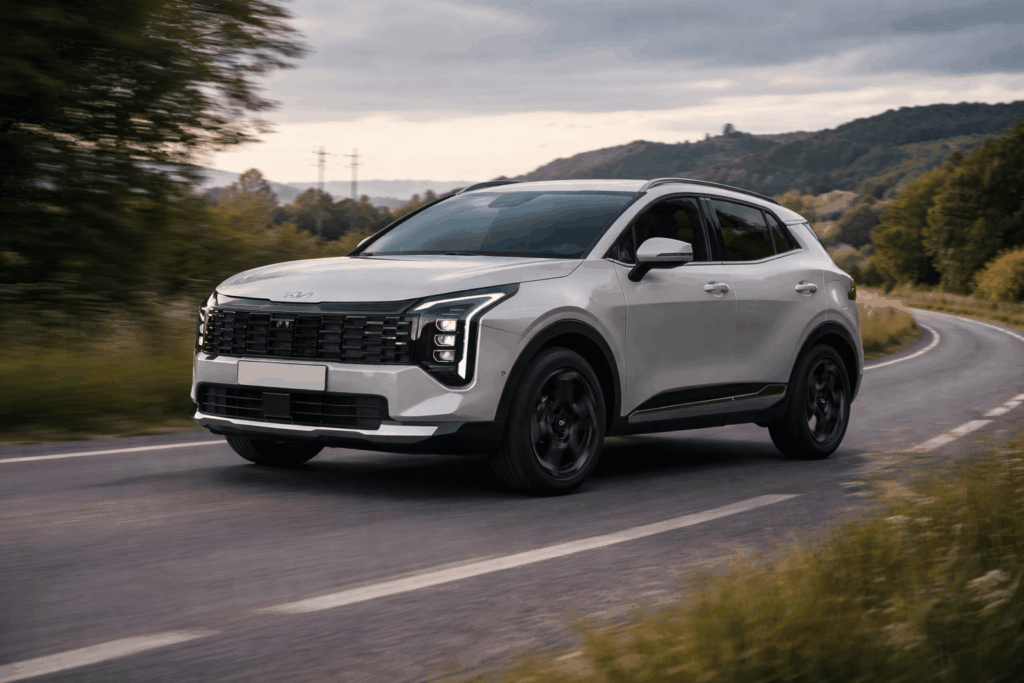
- Kia Sportage (used, pre-2022)
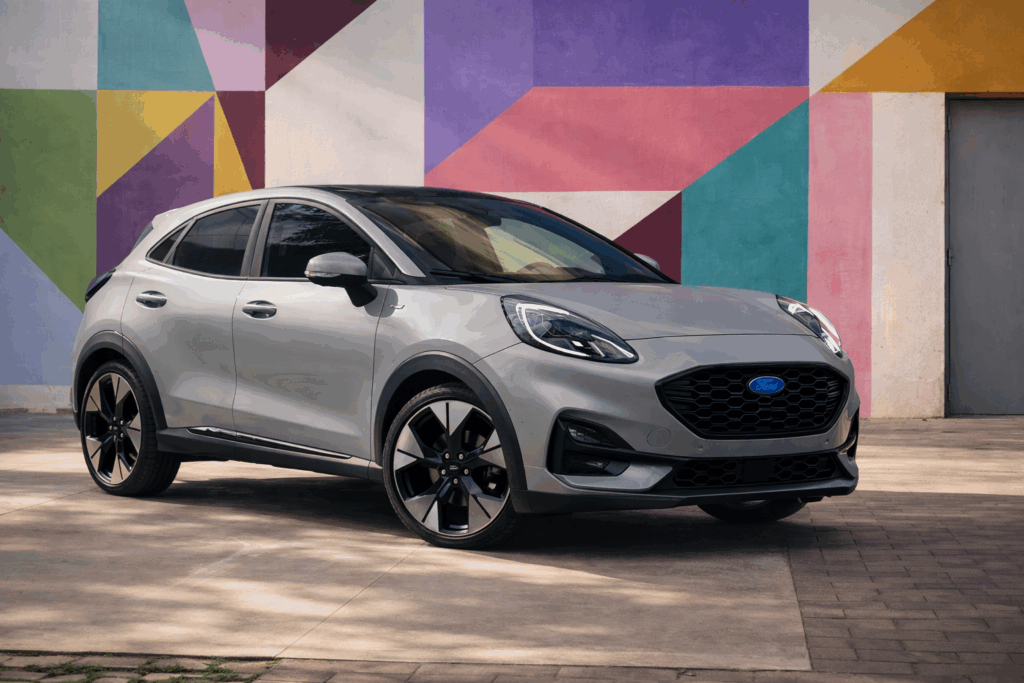
- Ford Puma (used)
- MG HS (strong value proposition, well-equipped)
£350+/month
Possible, but usually only if income is strong or the deposit is substantial. Current-generation used SUVs come into range here, particularly if you have a larger deposit or your credit history shows recent improvement.
The most important piece of advice in this section: choosing a cheaper car doesn’t mean settling for something bad. It means improving your approval chances, keeping your payments manageable, and building a positive payment history that opens doors down the line. A £10,000 to £15,000 used SUV is far more achievable for buyers with imperfect credit than a £25,000 newer model.
For model-specific finance guides: Nissan Qashqai finance | Kia Sportage finance | Ford Puma finance | SUV finance overview
What Credit Score Do You Need for SUV Finance?
There’s no single answer, because different finance partners use different credit reference agencies and have different thresholds. But here’s where each of the three main UK agencies puts “poor” and “very poor” credit:
| Credit reference agency | Score range | Poor | Very poor |
|---|---|---|---|
| Experian | 0–999 | 561–720 | 0–560 |
| Equifax | 0–700 | 280–379 | 0–279 |
| TransUnion | 0–710 | 566–603 | 0–565 |
You can check your score for free through Experian, Equifax, or ClearScore (which uses TransUnion data). It’s worth checking all three, since different finance partners pull from different agencies and your score can vary between them.
More importantly: many specialist finance partners don’t use a hard score threshold at all. They look at the full picture. A low score combined with stable income, a reasonable deposit, and a sensible car choice can still lead to an approval. A soft search through Motorly lets you find out what’s possible without any impact on your file.
How to Improve Your Chances of Approval
Small changes can make a bigger difference than you might expect. Some of these take time. Others you can do today. Focus on the quick wins first.
- Check your credit report for errors. Incorrect addresses, accounts that show as open when they’re closed, or someone else’s debt on your file can drag your score down unfairly. All three agencies let you dispute errors for free.
- Register on the electoral roll. One of the fastest and easiest wins. It confirms your identity and address, which finance partners use to verify you. If you’re not registered, do it now at gov.uk.
- Put down a larger deposit. The typical deposit is around 10% of the car’s value. Going to 20–25% reduces the loan amount and changes how finance partners assess risk. Even an extra £500 to £1,000 can shift a finance partner’s view. On a £10,000 car, 20% is £2,000 to £2,500 upfront.
- Choose a more affordable car. A lower finance amount is less risky for the finance partner. The difference between a £10,000 SUV and an £18,000 one changes the calculation significantly.
- Avoid multiple applications in quick succession. Every full credit application leaves a hard search on your file. Multiple hard searches in a short period signals financial stress to finance partners. Always use a broker like Motorly who runs a soft check before any hard search.
- Show stable income. Even if it’s not high, consistent, demonstrable income tells specialist finance partners that you can manage the payments. Three months of bank statements is typically what’s needed.
If you’ve been refused finance elsewhere: read our guide on what to do after being refused car finance.
Can You Get SUV Finance With a CCJ or Default?
This is usually the part people are most nervous about. These are the two questions we get asked most often, and the honest answer to both is: it depends, but it’s often possible. Older, satisfied issues are generally viewed more favourably than recent, unresolved ones.
CCJs
County Court Judgements make finance harder, but not impossible. Older CCJs are viewed more favourably than recent ones. A CCJ from three or four years ago carries less weight than one from six months ago. Satisfied CCJs (where the debt has been paid) are better than unsatisfied ones. Expect higher rates, and possibly a larger deposit requirement. Read more about CCJ car finance.
Defaults
Similar logic applies. Age matters, and whether the default is satisfied matters. A single older default is very different from multiple recent ones. Specialist finance partners assess each case individually rather than applying a blanket rule.
Missed payments
Occasional missed payments on lower-priority accounts are less serious than a pattern of missed payments on credit agreements. If it was a one-off during a difficult period, many finance partners will still consider your application.
IVA (Individual Voluntary Arrangement)
Possible in some cases, but you’ll typically need written permission from your insolvency practitioner before taking on new credit. Read more about IVA car finance.
Discharged bankruptcy
Once you’ve been discharged, you can apply for finance. Many specialist finance partners will consider applications from one year after discharge onwards. The longer since discharge, the better.
None of these situations come with a guarantee of approval. What they all have in common is that specialist finance partners look at them individually rather than rejecting automatically. Bad credit happens to good people. Job losses, illness, relationship breakdowns, the pandemic. Specialist finance partners who focus on imperfect credit understand this.
Will Applying Damage My Credit Score?
The last thing you want is another mark on your credit file. That’s why the first step with Motorly is always a soft check. Here’s exactly what happens at each stage.
A soft check (Motorly’s first step): Does not appear on your credit file. Other finance partners cannot see it. It has no impact on your score. This is how Motorly checks your initial eligibility. You can do this without any risk to your credit position.
A hard check (a full finance partner application): Does appear on your credit file and is visible to other finance partners. This only happens if you choose to proceed after the soft check has given you a positive indication. A single hard search for car finance is completely normal and expected by finance partners.
The practical upshot: checking your options through Motorly will not make your credit situation worse. You find out where you stand, with no footprint. If the picture looks positive and you choose to proceed, one hard search is a normal part of the process.
What you want to avoid is making multiple full applications in quick succession without knowing your chances first. That’s exactly what a soft-check broker approach is designed to prevent.
Our soft check won’t affect your credit. See your options in minutes.
HP vs PCP for Bad Credit SUV Buyers
For most buyers with imperfect credit, HP is the right product. When credit history is imperfect, simplicity usually works in your favour. Here’s why.
With HP, the car acts as security for the loan until the final payment clears. That reduces risk in how finance partners assess it, which is why more specialist finance partners offer HP for buyers with imperfect credit than PCP. You’re also paying down the full value of the car across the term, which means no balloon payment at the end and no decision to make about whether to hand the car back or refinance.
Every payment you make on an HP agreement builds equity in the car and, if you pay on time consistently, helps rebuild your credit record. That’s a genuine long-term benefit beyond just getting from A to B.
PCP with bad credit is harder. Fewer specialist finance partners offer it, and the balloon payment structure adds uncertainty at the end of the term. It’s not impossible, but for most people in this situation HP is more achievable and more straightforward.
For a full comparison of how PCP and HP work: PCP vs HP guide.
How to Apply for Bad Credit SUV Finance With Motorly
The process is straightforward and designed specifically not to make your situation worse at any stage.
- Quick online application.
Fill in your details online. It takes around two minutes. Basic information about you, your income, and the kind of car you’re looking for. - Soft credit check, no impact on your score.
Motorly’s panel of specialist finance partners reviews your application. Because it’s a soft search, nothing appears on your credit file at this stage. You get an indication of what you could be approved for, with no commitment and no footprint. - Find your SUV.
If things look positive, you get a budget and can buy from any approved dealer across the UK. You’re not tied to a single manufacturer, dealership, or forecourt. There’s no obligation at any stage. You’re simply finding out what’s possible.
Motorly is a broker, not a finance partner. That means your application gets matched across a panel of specialist finance partners rather than assessed by just one. For buyers with imperfect credit, that breadth of coverage makes a real difference.
Apply for bad credit SUV finance. Specialist finance partners, decision in minutes, no obligation.
Bad Credit SUV Finance FAQs
Can I finance an SUV with a credit score below 500?
Here are the questions we hear most often from buyers in your position.It’s possible, depending on the finance partner and your broader circumstances. Some specialist finance partners don’t use a score threshold at all and focus instead on current affordability and recent credit behaviour. A lower score makes finance harder and typically means higher rates, but it doesn’t automatically mean a refusal. Running a soft check through Motorly will give you a clearer picture of what’s available to you without affecting your score.
Will I definitely be approved for bad credit SUV finance?
No one can guarantee approval, and any broker or finance partner who does should be treated with caution. Approval depends on your individual circumstances: your income, the size of your deposit, the value of the car, and your specific credit history. What Motorly can do is match you with specialist finance partners who are set up to consider non-standard credit situations, which gives you a better chance than going to a mainstream finance partner directly.
Is bad credit car finance more expensive?
Yes, typically. Higher APRs reflect the additional risk the finance partner takes on. The worked examples above show what this means in practice. Choosing a more affordable car reduces the loan amount and can bring monthly payments to a manageable level even at a higher rate.
Can I finance a used SUV with bad credit?
Yes. Used vehicles are often more achievable for bad credit applicants because the loan amount is lower, which reduces the finance partner’s exposure. Most specialist bad credit finance is on used cars. The SUV tier from £8,000 to £15,000 is where most approvals happen for this audience.
Can financing a car improve my credit score?
Yes, if you make every payment on time. Consistent, on-time payments on a finance agreement are one of the most effective ways to rebuild a credit record over time. This is one of the genuine long-term benefits of taking out car finance, even at a higher rate, when you can genuinely afford the monthly payments.
What deposit do I need for bad credit SUV finance?
There’s no fixed minimum. More specialist finance partners offer options with a smaller deposit, though a larger deposit (20–25% of the car’s value) significantly improves your chances and reduces your monthly payment. On a £10,000 car, 20% is £2,000. If 0% deposit is what you need, see our SUV finance with no deposit options guide.
Is HP or PCP better for bad credit?
HP, in most cases. More specialist finance partners offer HP for buyers with imperfect credit. The car acts as security which lowers risk, and there’s no balloon payment at the end. PCP is possible in some cases but less commonly available through specialist finance partners.
Can I get SUV finance with no credit history?
A thin or non-existent credit history is a different situation to bad credit, though finance partners treat it with similar caution. If you have little or no credit history, specialist finance partners will focus more heavily on your income and employment stability. Building some credit history first (a credit card used lightly and paid off monthly, for example) can help, but it’s not always essential. A soft check will tell you where you stand.