

VW Tiguan Finance: Is It Worth the Premium?
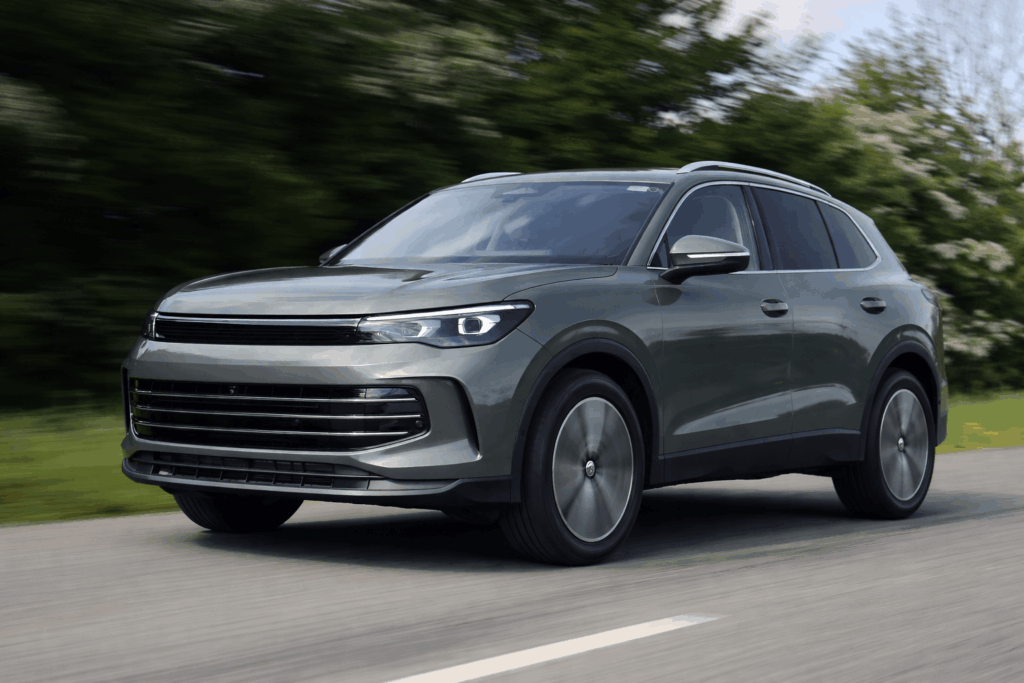
The VW Tiguan is the premium choice in the mid-size SUV segment. It costs more than a Kia Sportage or Nissan Qashqai — but VW regularly offsets that with generous deposit contributions and competitive PCP rates that can bring the monthly payments closer than you’d expect.
If you’re here, you’re probably trying to answer one simple question: is it actually worth the extra each month? This guide works through that honestly — what Tiguan finance costs on new and used models, where the value is, and how to get the best deal whether you’re buying from a main dealer or an independent.
Browse VW Tiguan finance options on Motorly — soft credit check, no impact on your score.
How Much Is VW Tiguan Finance Per Month?
The first number most buyers want to know is the monthly payment. Here’s a realistic picture across the range:
VW’s current headline PCP offer runs at £499/month with a £1,250 customer deposit and a £5,441 VW finance deposit contribution at 7.9% APR over 48 months. That £5,441 contribution is the bit that really changes the maths — it reduces the amount being financed by over £5,000, which is what keeps the monthly payment competitive despite the Tiguan’s higher list price. Without the contribution, expect to pay £550–£650/month on a new model depending on trim. Which suddenly makes the premium feel a lot more real.
On the used market, the picture shifts considerably. A 2020–2023 Tiguan typically costs £18,000–£30,000, with PCP payments from around £300–£450/month. Go back to the 2016–2019 generation and you’re looking at £12,000–£18,000 all-in, with HP payments from around £250–£350/month — that’s strong value for a car that still feels properly premium to drive.
| Finance Type | Typical Price | Deposit | Monthly | Term | Total Cost |
|---|---|---|---|---|---|
| New PCP (with VW contribution) | £33,000 | £6,691 (inc. £5,441 VW contribution) | £499 | 48 months | ~£30,643 |
| New PCP (without contribution) | £33,000 | £1,250 | ~£610 | 48 months | ~£30,530 |
| Used PCP (2020–2023) | ~£24,000 | ~£1,500 | ~£380 | 48 months | ~£19,740 |
| Used HP (2016–2019) | ~£15,000 | ~£1,500 | ~£300 | 48 months | ~£15,900 |
Note: Figures are indicative. Your actual rate will depend on credit score, deposit, and dealer. Always check the total amount repayable before signing.
→ See what you’d pay on a VW Tiguan — get a personalised quote in minutes.
VW Tiguan Trim Levels and Finance Costs
The current Tiguan range runs from Life at the entry point up through Match, Elegance, and R-Line, with the high-performance R (304PS) at the top. On the used market you’ll also find the previous generation in S, SE, SE Nav, Match, SEL, and R-Line specs — widely available and often excellent value.
For most buyers, Match is the sweet spot. On a new car it adds larger infotainment, parking sensors, adaptive cruise control, and the interior upgrades that make the Tiguan feel worth the money. On the used market, Match is the most commonly available trim and holds its value well — it’s the recommendation from most editorial guides, and it’s easy to see why.
R-Line adds the sportier bodykit, bigger wheels, and more aggressive styling but is mechanically identical to the Match. Worth it if the look matters to you; easy to skip if you’re purely focused on value.
The Tiguan R is a genuine performance car — 304PS, 4Motion AWD — but it sits in a different price bracket and targets a different kind of buyer. Monthly PCP payments on a used R typically run £100–£150/month more than an equivalent Match.
| Trim | New List Price (approx) | Indicative PCP (with VW contribution) |
|---|---|---|
| Life | ~£33,000 | ~£499/month |
| Match | ~£36,500 | ~£540/month |
| Elegance | ~£39,500 | ~£580/month |
| R-Line | ~£41,000 | ~£600/month |
| R (Performance) | ~£45,000+ | ~£680/month+ |
Tiguan vs Tiguan Allspace: Which Should You Finance?
The Tiguan Allspace is the longer-wheelbase 7-seat version of the Tiguan. If seven seats are what you need, it’s one of the better options at this price point — the third row is genuinely usable for children, though adults will feel it on longer journeys. Used Allspace models start from around £20,000 and finance very similarly to a standard Tiguan of the same age.
If you don’t need seven seats, the standard Tiguan is the stronger finance proposition. The current generation has a significantly better interior than the outgoing Allspace, a more efficient engine range, and the platform improvements that come with a full redesign.
Worth knowing: VW is effectively phasing out the Allspace name as the new Tiguan grows in size. The new standard model is meaningfully larger than its predecessor and now offers five proper seats with more boot space. For used buyers, the Allspace remains excellent value. For new buyers, the standard Tiguan is the cleaner choice.

Is the VW Tiguan Worth the Extra Over a Sportage or Qashqai?
This is the real question, isn’t it? The Tiguan costs more — but the monthly gap is often smaller than people expect, and what you get for it is genuinely tangible.
If you spend a lot of time in the car — school runs, motorway miles, long weekends away — you’ll notice the difference in refinement. The Tiguan is quieter, better damped, and more composed than either rival. Whether that’s worth paying for is a personal call, but it’s not just badge snobbery.
Here’s what you get for the Tiguan premium — and this is where it starts to justify itself:
- Interior quality that’s a noticeable step above — the materials, switchgear, and overall refinement are genuinely better than in either the Sportage or Qashqai
- VW badge prestige and residuals that depreciate more slowly than many rivals, which feeds back into better PCP deals (lower depreciation = lower balloon = less financed)
- The DSG automatic gearbox, widely regarded as one of the best dual-clutch units on the market
- A composed, polished driving experience — particularly on motorways
- VW’s deposit contribution, which can close the monthly payment gap to just £50–£100/month versus a similarly specified Sportage
And here’s where the rivals fight back:
- Warranty: VW offers 2–3 years vs Kia’s class-leading 7-year coverage — a meaningful difference if long-term peace of mind matters
- Hybrid options: The current petrol Tiguan range doesn’t offer a hybrid. The Sportage offers HEV and PHEV, and the Qashqai has e-POWER
- Servicing costs: VW main dealer servicing typically runs higher than equivalent Kia or Nissan plans
- List price: The Tiguan starts £3,000–£6,000 higher before any contributions
| VW Tiguan | Kia Sportage | Nissan Qashqai | |
|---|---|---|---|
| New price (from) | ~£33,000 | ~£28,000 | ~£27,000 |
| Indicative monthly PCP | ~£499 (with contribution) | ~£420–£450 | ~£380–£420 |
| Warranty | 2–3 years | 7 years | 3–5 years |
| Hybrid available? | No (petrol only) | Yes (HEV/PHEV) | Yes (e-POWER) |
| Interior quality | ★★★★★ | ★★★★☆ | ★★★★☆ |
The key number: VW’s deposit contribution typically narrows the real monthly gap to £50–£100/month. Whether that’s worth it for the interior, the badge, and the driving experience is genuinely a matter of priorities — but it’s a much smaller ask than the list prices suggest.
→ Compare Tiguan, Sportage and Qashqai finance deals side by side — soft check, no credit impact.
PCP vs HP on a VW Tiguan
The Tiguan has a useful PCP advantage: because Tiguans tend to hold their value, the balloon payment is usually set fairly high — which helps keep the monthly figure down. You’re financing a smaller slice of the car’s value compared to rivals that depreciate faster.
PCP suits you if you want to take advantage of that and VW’s deposit contribution, you like changing every 3–4 years, or you want access to a new Tiguan at the lowest possible monthly outlay. At the end of the term you can hand the car back, pay the balloon to keep it, or roll any equity into the next deal.
HP suits you if you want to own the car outright (and benefit from that strong resale when you eventually sell), you do high annual mileage, or you’re buying used where PCP deals may not be available or attractive. Monthly payments will be higher than PCP, but you’re building full ownership from day one with no mileage caps.
For a full breakdown of how the two products compare, see the Motorly PCP vs HP guide.
Can You Finance a Used VW Tiguan?
Yes — and the used Tiguan market is one of the healthiest in the segment. Because Tiguans retain their value strongly, there’s usually plenty of good stock around and prices don’t swing wildly depending on where you look.
Current generation (2024+): Ex-demo and nearly-new examples are starting to appear, but supply is still limited and pricing is close to new. Worth checking if a small saving justifies losing some of the factory warranty.
Previous generation (2016–2023): This is where the value is. The Match and SE Nav trims are the best used picks — well-equipped, commonly available, and straightforward to maintain. Budget £12,000–£28,000 depending on age, mileage, and spec. Finance is readily available from broker finance partners like Motorly regardless of which dealer you choose.
One practical detail worth knowing: the Tiguan shares its VW Group platform and mechanicals with the Skoda Kodiaq and SEAT Ateca. Parts are widely available, servicing isn’t specialist, and independent garages are comfortable working on them.
Browse used Tiguan finance options on Motorly’s Volkswagen finance page.
VW Tiguan Finance With Bad Credit
Finance is available on a VW Tiguan with a less-than-perfect credit history, but the higher price point means it’s worth being realistic about what’s achievable. If your credit score is limited, finance partners will typically approve lower finance amounts — which makes older Tiguans from the 2016–2019 generation the more practical route. Keeping the finance amount below £15,000 significantly improves approval odds. That’s why well-kept older examples often make far more sense than stretching for a newer plate.
Specialist finance partners on the Motorly panel consider applications that high-street banks and manufacturer finance arms decline. A soft credit check won’t affect your score, so there’s no risk in finding out where you stand.
Find out more about bad credit car finance on Motorly, including used SUV options that work well for buyers rebuilding their credit history.
How to Apply for VW Tiguan Finance With Motorly
If you’ve found a Tiguan you like — or you just want to know what’s realistic before you start looking — this is the low-pressure way to check. A soft credit search, a decision in minutes, and no commitment until you’re ready.
- Complete a short application online. We need your basic details and an indication of the car you’re interested in.
- Get a decision in minutes. Our panel of finance partners assesses your application and returns offers based on your circumstances.
- Choose your deal and buy from any approved dealer — not just VW main dealers. That’s a key advantage of broker finance: you’re not locked into one network or one price.
The Tiguan isn’t the cheapest SUV in its class — but it’s rarely the one people regret buying. If the numbers work for you, it tends to be a very easy car to live with.
→ Apply for VW Tiguan finance — decision in minutes, buy from any dealer.
VW Tiguan Finance FAQs
Is VW Tiguan finance expensive?
It looks expensive on paper. The monthly difference is usually smaller than you’d think. VW regularly offers deposit contributions of £4,000–£6,000 on new Tiguans, which significantly reduces the amount financed and keeps PCP payments competitive with cheaper rivals. On used models, finance costs are broadly in line with the wider SUV market.
What is the cheapest VW Tiguan to finance?
The entry-level Life trim has the lowest list price, but the Match trim often represents better overall value once you factor in the equipment levels. On the used market, pre-2019 examples in SE or SE Nav spec offer the lowest monthly payments — typically from £250/month on HP.
Is the Tiguan Allspace worth the extra on finance?
If you need seven seats, yes. The Allspace is one of the better 7-seat SUVs at this price point and used examples are available from around £20,000. If you don’t need the extra row, the standard Tiguan is a stronger deal — newer platform, more efficient, and a noticeably better interior.
Does VW offer 0% finance on the Tiguan?
Occasionally, though it’s rare on the Tiguan at standard dealer rates. VW’s typical approach is a significant deposit contribution at a competitive APR rather than true 0% finance. Some brokers claim 0% deals through bulk arrangements, but always check the total amount repayable — 0% doesn’t always mean lowest cost.
What deposit do I need for VW Tiguan finance?
On a new Tiguan with VW’s current offer, the customer deposit is £1,250 — VW’s contribution covers the rest of the upfront amount. Outside manufacturer offers, most finance partners prefer around 10% of the car’s value, though some will accept less. No-deposit options exist but come with higher monthly payments.
Is it better to finance a new or used Tiguan?
It really comes down to priorities. A new Tiguan benefits from VW’s deposit contributions, the latest platform improvements, and a full factory warranty. A used Tiguan from the 2019–2022 period offers much lower monthly payments and significantly lower total cost, with the same fundamental reliability. For buyers on a tighter budget, a used Match specification Tiguan is often the best overall deal.