How does it work?
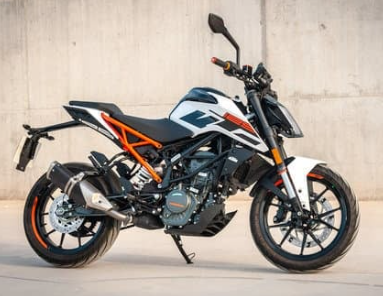
1. You will choose the bike you wish to proceed with
2. Discuss your budget, affordability and arrange your monthly payments/deposit/part exchange with the broker. (Any deposits would be taken from the overall price of the motorbike)
3. You’ll then choose your repayment period to pay the remaining balance, plus interest, in equal monthly repayments over the agreed term which can be 3, 4 or 5-year repayment terms.
4. The finance partner then buys the motorcycle on your behalf and owns the motorcycle for the duration of the finance agreement.
5. Once you have finished all of your payments, including any interest, you will then become the owner of the motorbike and it will be in your name.
A few bits of criteria that you may wish to consider before making an application for motorbike finance.
1. You must be at least 18 years old.
2. You must have the relevant driving license for the motorcycle.
3. The motorcycle is at risk of repossession if you do not maintain contractual repayments.
4. Protection under the Consumer Credit Act Termination Rights and Protection under the Consumer Rights Act.
5. Details of your credit agreement will be recorded with credit reference agencies and will show on your credit file once you take the finance.
Motorcycle finance presents a method of acquiring a motorbike by spreading the cost over a specified period instead of a single upfront payment. This flexible payment approach allows individuals to explore various financing options tailored to their preferences and financial circumstances.
Before obtaining a quote for motorcycle finance, it’s essential to assess your financial situation, including your budget, credit score, and monthly income. Evaluating the various finance options thoroughly will enable you to select the most suitable one that aligns with your needs and financial capabilities.
In conclusion, motorcycle finance offers a practical means of purchasing your dream bike without straining your finances.
When you finance a car, you’re borrowing money from a finance partner to buy the vehicle.
The finance partner owns the car until you pay off the loan.
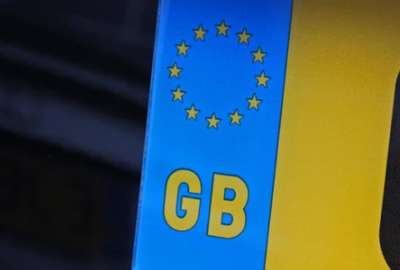
As the registered keeper, you can add a personalised number plate, but you must consider certain steps.
Check with your finance partner:
Ask if they have any requirements or restrictions for adding a personalized plate. Some may need permission or have guidelines for the plate’s size and style.
Follow DVLA rules:
The DVLA has specific regulations for personalized plates.
These include:
Plates can’t start with “Q” or “NIQ.”
You can’t assign a plate to a “Q” registered vehicle.
Plates shouldn’t make the vehicle appear newer than its actual age (e.g., using an “09” plate on a “05” car).
Avoid plates that are rude, offensive, or inappropriate.
If the plate violates any of these rules, it won’t be valid, and it would be illegal to use it on a vehicle. Illegal plates may result in the plate being confiscated and a fine of £1000. Ensure your personalized plate is correctly registered with the DVLA by completing the required paperwork and paying the fees.
Note: If you plan to transfer the personalised plate to another vehicle in the future, there may be additional fees and paperwork involved.
In summary, you can put a personalised number plate on a financed car, but you must adhere to your finance partner’s requirements and the DVLA’s regulations.
Adding a unique touch to your car is possible while being a responsible registered keeper of the vehicle.
Never miss your MOT again
Check your MOT status and get free reminders by email. Quick, official, and totally free through Motorly.
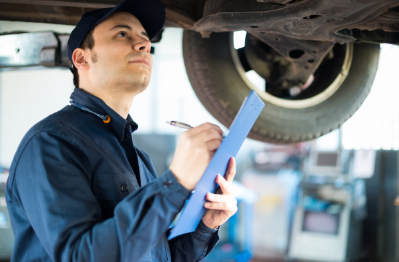
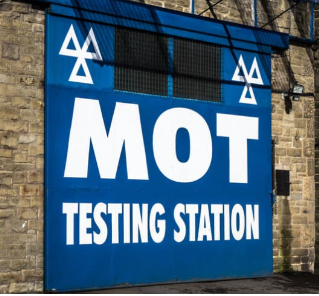
The MOT test is a thorough inspection that assesses your vehicle’s safety, roadworthiness, and environmental compatibility. The test’s primary objective is to guarantee that vehicles on our roads fulfil specific legal prerequisites and pose no threats to the driver, passengers, pedestrians, or the environment.
What is the average cost of an MOT?
In the UK, the average cost of an MOT test ranges from £35 to £55 for an ordinary car or van. However, if your vehicle requires any repairs, the cost will naturally increase. To avoid unexpected costs, it’s always wise to compare prices from various garages and book your MOT test well in advance.
What happens during an MOT Test?
Here’s a typical sequence of an MOT test:
Preliminary inspection checks
External examination
Internal inspection
Under-the-bonnet checks
Underneath the vehicle inspection
Brake test
Emissions test
For instance, one of the checks performed is the Lights and Signals test. During this check, the operation of all lights, including headlights, indicators, brake lights, fog lights, and hazard lights, are scrutinized to confirm they’re functioning correctly.
What Happens if Your Vehicle Fails the MOT Test?
If your vehicle meets all the required criteria, it will successfully pass the MOT test. If not, you’ll be informed about the discovered issues and the vehicle will fail the test. In such cases, it’s your responsibility to address these issues and arrange necessary repairs or replacements. Once the required repairs are complete, the vehicle can be retested to secure a valid MOT certificate.
MOT tests are conducted regularly (annually for vehicles over three years old) to ensure vehicles stay safe and roadworthy throughout their use.
I am sure you will have seen these 4 letters a lot on the news/social’s for probably a couple of years now, ULEZ.
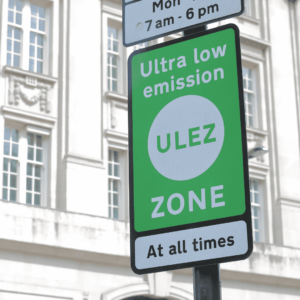
First and foremost, what is ULEZ?
ULEZ stands for Ultra Low Emission Zone. It is an initiative implemented by the government to reduce air pollution and improve air quality in the cities. Under the ULEZ scheme, vehicles entering or driving within the zone need to meet specific emission standards to avoid paying a daily charge. The emission standards are based on the vehicle’s exhaust emissions of nitrogen oxides and vehicles that do not meet the required standards must pay a daily fee to enter the ULEZ.
So how does this fee affect you?
To put it simply, if you own a car/motorbike or small van you could be looking at £4,562.50 over a yearly period, as the daily charge is £12.50 in central London. This applies 24 hours a day, 7 days a week and does not exclude any public holidays. There are no days off when it comes to ULEZ! If you are a HGV driver or Coach Driver/Bus Driver, this could be considerably higher in the region of £36,500 as the charge for this type of vehicle is £100 per day. (However, these fees would tend to be covered by the employer) It is also worth noting that these charges are in addition to the existing Congestion Charge which makes ULEZ a serious topic as it affects each and every one of us.
What to do if your current vehicle is not ULEZ Compliant?
Dealerships may accept non-compliant cars as part of a trade-in or part-exchange if they believe they can still sell the vehicle or if they can make necessary modifications or repairs to bring the vehicle into compliance. If you have a non-compliant car and are considering a part-exchange, it is probably best speaking to the dealership you are looking at your new car from, to ensure that they will accept the part-exchange. Motorly and our partners are happy completing this conversation for you to save you the time.
Final thoughts on ULEZ
If ULEZ works in the way, it is intended it should help to improve air quality which should then also benefit people’s health along with climate change benefits also to create a more sustainable urban environment for us all. The ULEZ serves as an important step towards achieving cleaner and greener cities. It is definitely worth checking whether your current vehicle or the new vehicle you are looking to finance is ULEZ compliant and Motorly and our partners are here to lend a hand if you have any questions or concerns about ULEZ regulations, exemptions, charges, or any other related topics.