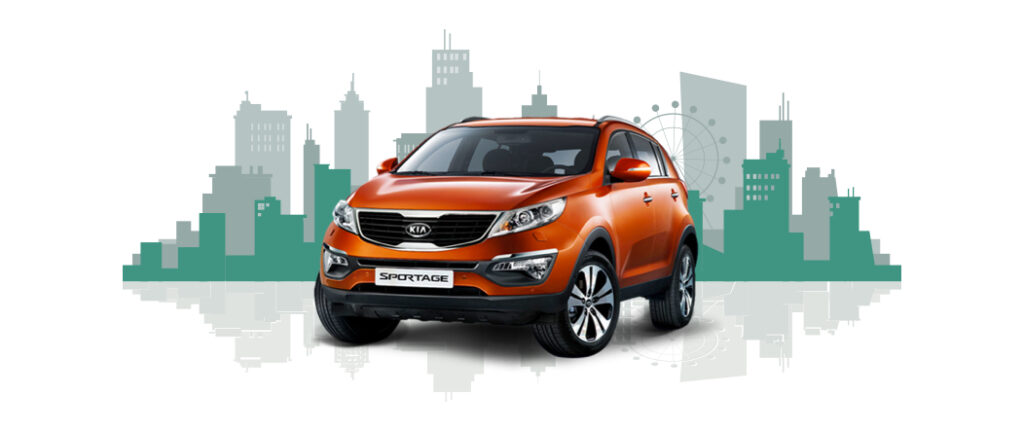
You don’t need to spend £400 a month to drive an SUV. There are genuine options available right now from under £150 a month on HP, and from around £200 a month on a new PCP deal. But here’s the bit most people miss: the cheapest SUV to buy isn’t always the cheapest one to finance. That’s why the monthly payment can look odd at first glance. Deposit contributions, promotional APRs, and how well a car holds its value can all change the maths. This guide works through the most affordable options based on what you’ll actually pay each month, not just the sticker price.
All monthly payment figures below are indicative, based on 10% deposit, 48-month term, and representative APR at time of writing. Always check current offers before committing.
Why the cheapest SUV to buy isn’t always the cheapest to finance
If you searched “cheapest SUV UK” and landed on a list ranked by list price, you got useful information – but not the full picture. Three things can flip that ranking once you factor in finance:
Deposit contributions. Manufacturers sometimes put money toward your deposit as part of a finance promotion. Volkswagen, for example, has offered over £5,000 toward a Tiguan deposit in recent campaigns. That directly reduces the amount you’re borrowing, which usually brings the monthly payment down straight away. A car with a £25,000 list price and a £5,000 deposit contribution can cost less per month than a £18,000 rival with no contribution at all.
Promotional APR. A 0% APR deal on a £25,000 SUV means you pay no interest – just the cost of the car spread across the term. Compare that to a budget SUV at 9% APR and the total repayable goes up considerably. That cheap list price can stop looking so cheap once you add two or three years of interest.
Residual values (PCP only). On PCP, your monthly payment covers the depreciation between purchase price and the guaranteed minimum future value (GMFV) not the full cost of the car. SUVs that hold their value well have a higher GMFV, so you’re financing a smaller portion of the purchase price. A car that depreciates quickly will have a lower GMFV and, all else equal, higher monthly payments despite the lower price. In plain English: some cars just finance better than others.
That’s exactly why this post exists. Parkers ranks by list price but says upfront it can’t account for finance costs. What Car? covers PCP but is paywalled and skips used options entirely. This guide does both.
Cheapest new SUVs to finance in 2026
The models below are ranked by indicative monthly PCP payment. These figures assume 10% deposit, 48-month term, and broadly representative APR based on current market rates. Manufacturer deals change quarterly – verify current offers before you apply.
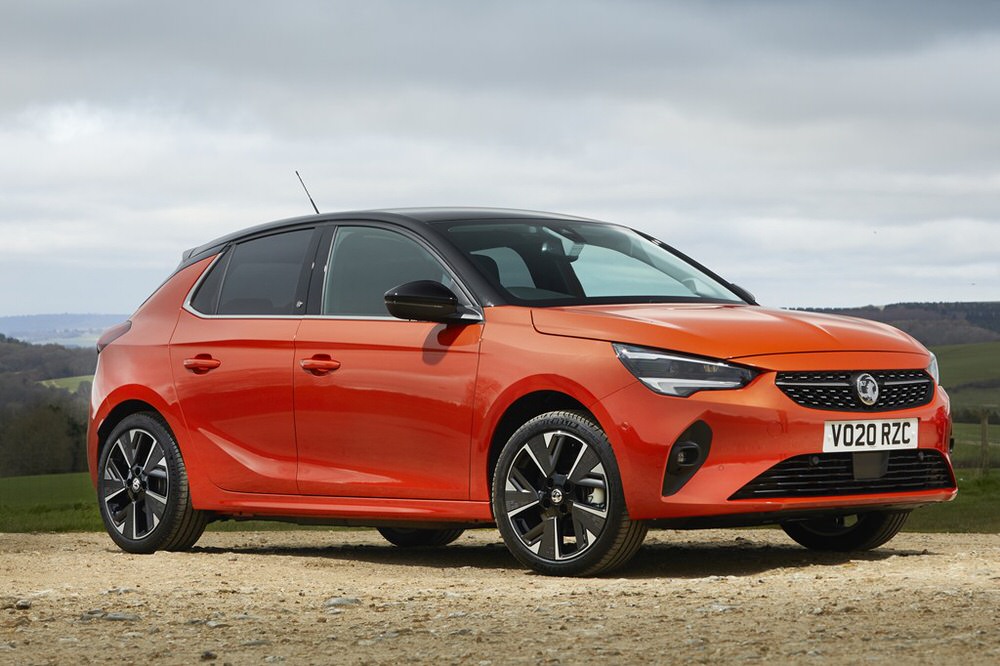
1. Dacia Duster – from around £200/month PCP
New from: £18,000 (Essential trim)
The Duster has lost ground as the absolute cheapest SUV by list price – the MG ZS now undercuts it on sticker. But it more than holds its own on monthly payments, where a combination of competitive pricing, reasonable residual values, and an occasionally attractive Dacia finance offer keeps it near the top of this list.
It’s also a better car than the price tag suggests. The 2024 refresh brought a noticeably improved interior, and the optional 4WD system gives it genuine off-road ability at a price point where most rivals don’t offer it at all. If your budget is tight and you want an SUV that actually works as one, the Duster is hard to argue with.
Finance note: Dacia doesn’t run 0% campaigns with any regularity. The monthly payment advantage here comes from the low purchase price rather than subsidised rates, which keeps it predictable.
2. MG ZS – from around £210/month PCP
New from: £16,000 (SE trim)
On list price, the ZS is one of the most affordable new SUVs you can buy. It’s a spacious car for the money, comes with a 7-year warranty, and has improved considerably in recent years. As a straight cash purchase or a long-term HP deal, it makes a lot of sense.
PCP is a more mixed story. The ZS depreciates faster than established brands, which means the GMFV is lower and the monthly payment doesn’t reflect the headline price quite as flatteringly. It’s still competitive, but the gap between cheap to buy and cheap to finance is smaller than you might expect.
Finance note: If you plan to own the car rather than change it at the end of the agreement, HP is probably the better route. You build equity throughout, and the resale question becomes your problem to deal with on your own terms.
3. SEAT Arona – from around £220/month PCP
New from: £22,000 (SE trim)
The Arona shares its underpinnings with the VW T-Cross and Skoda Kamiq – it gives you VW Group underpinnings without the full VW badge premium, which means you get the build quality and residual values of the group at a lower price. For PCP buyers, that matters: the stronger GMFV makes the monthly payment more competitive than the list price alone would suggest.
It’s compact enough to be genuinely practical in a city but still a proper SUV in terms of ride height and boot space. SEAT runs finance promotions periodically, so it’s worth checking current offers at time of purchase.
4. Kia Stonic – from around £230/month PCP
New from: £21,000 (2 trim)
Kia’s smallest SUV punches above its weight on the warranty front. The full 7-year, 100,000-mile cover is standard across the range. That long warranty helps with peace of mind, and it also helps residual values – cars still under manufacturer cover at three or four years old tend to hold their value better, which feeds back into the PCP calculation.
Kia also runs deposit contribution campaigns on the Stonic from time to time. When those are available, the monthly payment comes down further.
Finance note: Entry trim is reasonably well-equipped. It’s worth checking what the next trim up adds before committing – the jump in specification sometimes justifies a modest increase in monthly payment.
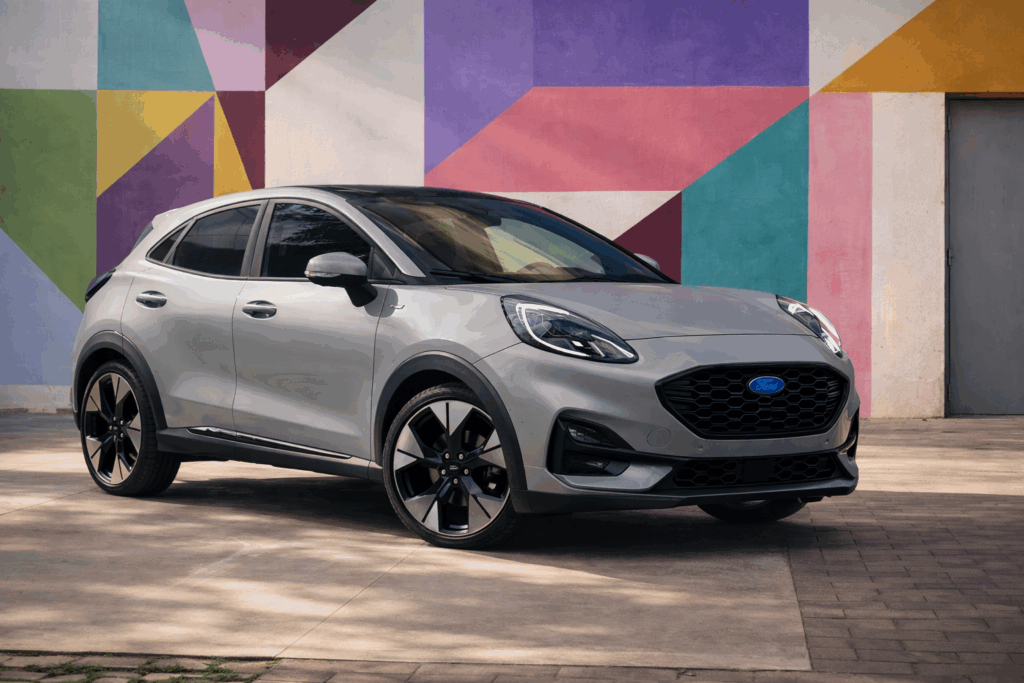
5. Ford Puma – from around £250/month PCP
New from: £26,500 (Titanium trim)
The Puma costs more to buy than everything above it on this list, but Ford’s finance campaigns regularly close that gap. When a 0% or low-APR offer is running, the Puma can undercut competitors with significantly lower list prices. It’s also probably the best to drive at this end of the market – something that matters if you cover decent mileage.
Finance note: Ford promotions are time-limited and vary by region and dealer. Check current offers carefully. When there’s a deal, this is an excellent choice; without one, the list price puts it in a different bracket. We have a full Ford finance guide with more detail on both new and used options.
6. Hyundai Kona – from around £250/month PCP
New from: £23,700 (Advance trim)
Hyundai offers 0% APR on the Kona more consistently than most manufacturers at this price point. When that rate is available, the Kona becomes one of the genuinely cheaper new SUVs to finance in the UK, despite not being the cheapest to buy. Without a promotional rate it’s more ordinary on the numbers, so timing matters.
Worth noting: the Kona is also available as a full electric version (Kona Electric) for those who want SUV practicality with zero tailpipe emissions. The finance picture on the EV is different – check current offers separately.
For most budget buyers, this is where the real value is. A used SUV on HP will usually carry a lower monthly payment than a new equivalent on PCP – and you own the car outright at the end. The models below represent the best combination of low purchase price, reliability record, and running costs. Monthly payments are based on HP at 8.9% representative APR, 10% deposit, 48-month term.
1. Dacia Duster (2018-2023) – from around £120/month HP
Used from: £7,000–£14,000
The previous-generation Duster is one of the cheapest SUVs you can finance in any form. At the lower end of the used market you’re talking about genuine working SUVs – not perfect, not premium, but functional and cheap to keep running. Dacia’s reputation for mechanical simplicity means there’s less to go wrong and parts are inexpensive when something does. If the sole question is minimum monthly outlay for an SUV, this is often the answer.
2. Suzuki Vitara (2015-2021) – from around £130/month HP
Used from: £8,000–£14,000
Overlooked, underrated, and consistently reliable. The Vitara is smaller than the Duster and lacks its off-road capability, but it’s a tidy, well-built car with low running costs and Suzuki’s strong reliability record. Available with 4WD on higher trims. If you want something a step above the bare minimum without stretching the budget, the Vitara is worth a look.
3. Hyundai Tucson (2015-2020) – from around £150/month HP
Used from: £9,000–£16,000
The Tucson shares its platform with the Kia Sportage, which tells you most of what you need to know. It’s bigger than the Vitara, more conservative in styling, and widely available at good prices. Strong reliability data and a broad dealer network make it a sensible long-term HP proposition. Check when the 5-year warranty expired on any example you look at – well-maintained post-2015 cars can still have meaningful cover remaining. We have a Hyundai finance page if you want to explore options further.
4. Nissan Qashqai (2017-2020) – from around £150/month HP
Used from: £9,000–£15,000
The UK’s best-selling SUV for good reason. There’s a vast pool of used Qashqais at this price point, which means plenty of choice on spec, mileage, and colour. High volume also keeps prices competitive and makes finding a good independent example relatively straightforward. The 2017-2020 generation is a solid car – not the most exciting thing on four wheels, but reliable, practical, and easy to move on later. We cover the Qashqai in detail on our Nissan Qashqai finance page.
5. Kia Sportage (2016-2021) – from around £160/month HP
Used from: £10,000–£18,000
The previous-generation Sportage is one of the better used SUV buys at this price. Spacious, well-equipped even on lower trims, and the 7-year warranty may still have years remaining on newer examples – which helps both reliability confidence and eventual resale. A higher purchase price than the Tucson or Qashqai, but the spec level and remaining warranty often justify it. More detail on our Kia Sportage finance page.
6. Ford Puma (2020-2023) – from around £170/month HP
Used from: £12,000–£18,000
Even used examples from the early production years still feel current – Ford has kept the Puma’s design fresh and the interior holds up well. It’s the most enjoyable to drive on this list, which counts for something if you spend a lot of time in the car. The higher purchase price reflects its relative newness and the Ford badge, but you’re getting more car here than with most older budget options. See our Ford finance page for full options.
New vs used: which is actually cheaper to finance?
In monthly payment terms, used HP wins most comparisons. An £11,000 used SUV on HP at 8.9% APR over 48 months works out cheaper per month than almost any new PCP deal, even a 0% one, simply because you’re borrowing less money.
New PCP can be competitive in specific situations: when a manufacturer 0% deal is running, deposit contributions bring the financed amount down, or you want the security of a full manufacturer warranty for the duration of the agreement. In those circumstances, a new car can make financial sense even against a significantly cheaper used alternative.
The honest answer is simple: if you want the lowest possible monthly payment, used HP usually wins. If you want a new car for a manageable monthly cost and you’ve timed a manufacturer promotion well, new PCP can be surprisingly close. The SUV finance hub has more on how these two routes compare across different budgets.
How to get the cheapest SUV finance deal
Track manufacturer offers. 0% APR and deposit contributions can change the cheapest-per-month ranking overnight. These promotions are usually time-limited to a quarter-end or a specific model year clearance. If you’re flexible on timing, it’s worth checking what’s live before you commit.
Put down more upfront. Every extra pound you put down is a pound less you need to borrow, which reduces monthly payments for the life of the agreement. Even an additional £500–£1,000 makes a measurable difference over four years.
Think about term length. A 48-month agreement costs less per month than 36 but more in total interest. For most buyers the lower monthly payment of 48 months is worth the trade-off; just be clear on what you’re paying in total either way.
Use a broker. Going directly to one dealer or one manufacturer’s finance arm means you get one offer. Through Motorly’s panel of finance partners, you’re seeing more than one route instead of just taking the first deal in front of you – which can make a real difference on rate. That’s particularly relevant if your credit file has any complications. You can read more about bad credit car finance if that’s relevant to your situation.
No deposit? It’s still possible. HP and PCP deals requiring no initial payment do exist, though they come with higher monthly costs. Our 0 deposit SUV finance page has more information.
How to apply for cheap SUV finance through Motorly
The process is straightforward and takes a few minutes:
1. Fill in a short application. Just the basics. Nothing over the top.
2. Get a decision. Motorly runs a soft credit check initially – no footprint on your file, no impact on your score.
3. Choose your car. Once approved, you can buy from any dealer in our approved network. You’re not tied to one forecourt or a tiny shortlist of cars.
What is the cheapest SUV to finance per month in the UK?
On a used HP deal, the pre-2023 Dacia Duster regularly comes in from around £120 a month based on a 10% deposit over 48 months. For new PCP, the Dacia Duster and MG ZS are usually the cheapest starting points, from around £200/month – though this depends on what offers are running at the time.
Can I finance an SUV for under £200 a month?
Yes, on a used HP deal. Several models, including the Dacia Duster, Suzuki Vitara, and Hyundai Tucson, can be financed for under £200 a month with a 10% deposit over 48 months. New PCP under £200/month is less common but possible when manufacturer promotions are running.
Is it cheaper to PCP or HP an SUV?
PCP on a new car often carries a lower monthly payment than HP on the same car, because you’re only financing the depreciation rather than the full purchase price. But HP on a used SUV will usually be cheaper per month in absolute terms. It really comes down to whether you want to own it at the end or swap it.
What is the cheapest SUV to insure and finance?
The Dacia Duster and MG ZS sit in lower insurance groups than most SUVs, making them relatively affordable on both counts. The Suzuki Vitara and Kia Stonic are also typically low-group cars. Always check the specific trim and engine variant, as the group can vary significantly within a model range.
Can I get cheap SUV finance with bad credit?
In most cases, yes. Motorly works with finance partners that specialise in applications from people with CCJs, defaults, or limited credit history. The rate may be higher than the headline APR, but finance is still often available. A soft check won’t affect your score. Our bad credit car finance page has more detail.
What deposit do I need for cheap SUV finance?
Most agreements use 10% of the purchase price as a baseline. Zero-deposit deals exist but carry higher monthly payments. A larger deposit always reduces your monthly outlay – even £500–£1,000 extra upfront makes a measurable difference over a 48-month term.
Are used SUVs cheaper to finance than new?
In monthly payment terms, usually yes. A used SUV at £11,000 on HP will usually cost less per month than a new equivalent at £23,000 on PCP, even at 0% APR. The exception is when manufacturer deals include large deposit contributions or very low promotional rates – in those cases, the gap narrows considerably.
If you’re looking at used Golfs and wondering whether you can actually afford one, and whether you’d get approved, you’re in the right place. The Golf has a reputation for holding its value, which is great news if you own one, and slightly less great news if you’re trying to buy one on a budget. But a used Golf on finance is more achievable than most people assume, even if your credit history isn’t spotless. This guide covers what you’ll actually pay each month, which models are worth targeting, and how to get approved.
What Does a Used VW Golf Cost on Finance?
One of the biggest questions buyers ask, and one most sites refuse to answer, is: what will I actually pay each month?
Here’s a realistic breakdown based on Hire Purchase (HP) finance, assuming a £500 deposit, 48-month term, and a representative APR of around 14.9%:
Generation
Typical Used Price
Indicative Monthly Payment
Golf Mk7 (2014-2017) 1.4 TSI / 1.6 TDI
£6,000-£10,000
£120-£180/month
Golf Mk7.5 (2017-2020) 1.5 TSI / 2.0 TDI
£9,000-£15,000
£170-£260/month
Golf Mk8 (2020-2023) 1.5 TSI / 2.0 TDI
£14,000-£22,000
£240-£380/month
Golf GTI (Mk7/Mk7.5)
£13,000-£22,000
£230-£380/month
These are indicative figures. Your actual monthly payment will depend on your credit profile, the deposit you put down, and the term you choose. A larger deposit or shorter term shifts the numbers noticeably.
The Mk7 and Mk7.5 are where most buyers find the best balance between cost and quality. The Mk8 is still relatively recent and carries a premium on the used market. If your budget is under £250/month, the Mk7.5 is where to focus your search.
Not all Golfs are equal, and the wrong choice can mean paying more each month for a car that doesn’t suit your situation. Here’s how the main generations break down.
The Budget Pick: Golf Mk7 (2013-2017)
The Mk7 was a significant step up in quality over its predecessor: better materials, more efficient engines, sharper to drive. It’s now old enough to be genuinely affordable on finance, while still feeling like a proper modern car.
Best engine choice: the 1.4 TSI petrol suits most buyers well. Insurance groups 14-18, 45-50 mpg on a run, and there’s plenty of stock to choose from. The 1.6 TDI is worth considering if you cover 15,000+ miles a year. Better economy, but check for DPF issues on any low-mileage example, as short town journeys can cause problems. The 1.2 TSI is best avoided if you spend any time on motorways. It feels out of its depth above 60mph.
Worth it if you want to keep monthly payments under £180 and you’re not bothered about having the latest infotainment. Solid, predictable, and great value.
The Sweet Spot: Golf Mk7.5 (2017-2020)
The 2017 facelift brought proper improvements: a more responsive touchscreen, LED taillights, and the 1.5 TSI Evo engine, which is noticeably smoother and slightly more efficient than the 1.4 it replaced. It doesn’t sound like a big deal on paper, but you notice it on a longer drive.
This is usually where the budget starts to look most sensible. Modern enough to feel current, affordable enough to sit comfortably under £250/month for most buyers. If you’re currently looking at Mk7 prices, it’s worth stretching slightly to see what Mk7.5 options come into reach. The gap in quality is real.
Best if you want something that still feels fresh but doesn’t come with Mk8 running costs. This is the generation we’d point most buyers towards.
The Modern Choice: Golf Mk8 (2020 Onwards)
The Mk8 is the most capable Golf yet, with a fully digital interior and a genuinely premium feel. But the early models (2020-2022) had well-documented teething problems. A slow, frustrating touchscreen and the removal of physical climate controls annoyed a lot of owners. Most of those issues were fixed via software updates, but it’s worth checking these have actually been applied on any car you’re looking at.
The 2024 Mk8.5 facelift resolved most complaints, but those cars are still expensive on the used market. If your budget allows £300+/month and you want something that feels close to new, the Mk8 is worth considering.
Where it makes sense: bigger budget, you want the best spec, and you’re happy to check the software history on any early example. If you’re stretching to afford it, the Mk7.5 is almost certainly the smarter call.
The Fun One: Golf GTI
If you can stretch, the GTI is hard to ignore. A used Mk7 GTI at £13,000-£17,000 is one of the best performance bargains on the used market. 220bhp, genuine hot hatch character, and practical enough for everyday use.
Be honest with yourself about the running costs though. Insurance sits in groups 29-33, which can be a shock if you haven’t checked first. Real-world fuel economy drops to around 30-35 mpg versus 40-48 mpg for a standard petrol Golf. Those numbers add up over a year. HP tends to be the better finance route for a GTI. If you’re buying one, you’ll probably want to keep it.
Who this suits: buyers who’ve done the sums on insurance and running costs and still want one. Which, honestly, is a reasonable position.
Can You Get VW Golf Finance with Bad Credit?
More people get approved than assume they will. That’s worth saying upfront, because a lot of buyers with a rough patch on their credit file talk themselves out of applying before they’ve even tried.
Specialist finance partners look at your current situation: your income, your outgoings, what you can realistically afford each month, rather than treating an old default or a couple of missed payments as the final word. One thing from three years ago doesn’t automatically define your outcome today.
The Golf’s strong residual values actually help here. Lenders are more comfortable financing a car that keeps its value. It’s less risk for them, which makes them more willing to consider applicants who wouldn’t pass a standard high-street finance partner’s criteria.
A few things that genuinely make a difference:
Choose a sensible price point. A £8,000 Mk7 is a much more realistic approval than a £20,000 Mk8. The lower the amount you need to borrow relative to your income, the better your chances.
Stable income and address. Lenders weight these more heavily than most people expect. Time in your current job and at your current address matters.
HP over PCP. HP approval is based more on what you can afford now. PCP tends to be more dependent on your credit score.
A small deposit. Even £300-£500 shows commitment and reduces how much you’re borrowing.
Motorly works with specialist finance partners who cover all credit situations. Our soft search won’t affect your credit file. You can see what’s available without any risk to your score.
VW Golf Running Costs: What to Budget Beyond the Monthly Payment
The monthly payment is what gets the attention, but it’s not the whole picture. Here’s what to factor in before you commit.
Insurance
1.4/1.5 TSI petrol: typically groups 14-20
2.0 TDI diesel: groups 18-23
Golf GTI: groups 29-33
Insurance can catch people out, particularly on the GTI, or for younger drivers who haven’t checked before falling for a specific spec. Get a quote before you get attached to a particular car.
Fuel Economy (Real-World Figures)
1.5 TSI petrol: 40-48 mpg
2.0 TDI diesel: 50-58 mpg
Golf GTI: 30-35 mpg
The diesel only makes financial sense if you’re doing regular motorway miles. 15,000+ per year is roughly where the economy offsets the higher purchase price. Below that, the petrol is usually the better choice.
Servicing
VW intervals are typically every 10,000 miles or annually. Budget £150-£250 for a standard service at an independent specialist. They’re usually 30-40% cheaper than main dealers and use the same parts. A cheap used Golf that’s had its servicing skipped stops being cheap pretty quickly, so check the history carefully.
Road Tax (VED)
1.5 TSI Mk7.5: £155/year
Older 1.4 TSI: varies by CO2. Worth checking before buying.
Diesel models: varies. Some pre-2017 diesels are in higher bands.
Known Issues to Watch
Mk7: water pump failures on higher-mileage cars. Check the service history. DSG gearbox fluid changes are often overdue on second-hand examples. Budget for one if it hasn’t been done.
Mk8 (2020-2022): infotainment software issues. Most resolved via updates, but verify they’ve been applied.
None of this should put you off. The Golf has a strong reliability record and excellent specialist support across the UK. Just go in knowing what to look for.
HP vs PCP for a Used VW Golf
Two finance products dominate the used car market. Here’s how they compare:
Hire Purchase (HP)
Fixed monthly payments for the full term
You own the car once the final payment is made
No mileage limits
More accessible for buyers with imperfect credit
Best for buyers who want to keep the car long-term
Personal Contract Purchase (PCP)
Lower monthly payments (you’re not paying off the full value)
A balloon payment due at the end if you want to keep the car
Mileage limits apply. Exceed them and you pay a penalty.
Requires a stronger credit profile
Better suited to buyers who change cars every 3-4 years
For most buyers financing a used Golf, HP is the straightforward choice. You know exactly what you’re paying, there are no end-of-contract surprises, and the car is yours at the end. PCP can make sense on a more expensive Mk8 if you want to bring the monthly payment down, but only if your credit profile makes you eligible and you’re comfortable with the balloon payment at the end.
Yes, and more often than people expect. Specialist finance partners look at your current affordability: income, outgoings, stability, rather than treating one old problem as the whole story. A sensible vehicle choice and a small deposit both help. It’s worth checking rather than assuming you’ll be declined.
How much is a used VW Golf on finance per month?
As a rough guide: a Mk7 Golf typically starts from around £120-£180/month on HP with a £500 deposit over 48 months. A Mk7.5 comes in at around £170-£260/month. A Mk8 is £240-£380/month. Your actual figure depends on the car, your deposit, the term, and your credit profile. The only way to get a real number is to check.
What deposit do I need for VW Golf finance?
There’s no set minimum. Some finance partners will consider zero deposit, though even £300-£500 can meaningfully improve your approval chances and bring the monthly payment down. More deposit generally means more options.
Which VW Golf is the cheapest to finance?
The Mk7 (2013-2017) is the most affordable entry point. A 1.4 TSI in SE trim is typically the cheapest to buy, insure, and run. The right choice if keeping the monthly cost low is the priority.
Is a VW Golf a good car to finance?
Yes, for a few reasons. It holds its value well, which finance partners like. Its reliability record keeps running costs predictable. And if you come to sell or part-exchange later, you’re unlikely to be caught out the way you might be with a car that depreciates faster.
Can I get VW Golf finance with no deposit options?
Possibly, depending on your situation and the finance partner. Zero-deposit finance is available but tends to require a cleaner credit profile. If your history is imperfect, a small deposit makes a real difference to both approval chances and monthly cost.
What credit score do I need for VW Golf finance?
There’s no single number that works across all finance partners. Different finance partners use different criteria, and specialist finance partners focus more on your current income and affordability than on historical credit events. Motorly’s soft search lets you see what’s available without any risk to your score.
Should I choose HP or PCP for a used Golf?
For most used Golf buyers, HP makes more sense. You own the car at the end, there are no mileage penalties, and it’s more accessible if your credit isn’t perfect. PCP offers lower monthly payments but carries a balloon payment at the end and typically needs a stronger credit profile to qualify.
Finance figures are indicative, based on a representative APR of 14.9%, £500 deposit, and 48-month term. Your actual rate and monthly payment will vary based on your circumstances and the finance partner. Motorly is a credit broker, not a finance partner.
There’s no single magic number that unlocks car finance approval in the UK. Credit scores vary by bureau (Experian, Equifax and TransUnion), every finance partner applies its own internal risk model on top, and a score that gets you declined by one finance partner might be perfectly fine for another. But that doesn’t mean your score is irrelevant – far from it. This guide breaks down what different score ranges realistically mean for car finance, which products are available at each level, and what to do if your rating falls short.
The problem with “minimum credit score” advice
A lot of articles online promise a simple answer: “you need at least X to get approved.” In the UK, it rarely works like that — and here’s why.
Most UK finance partners don’t publish minimum score requirements. Even where internal cut-offs exist, they’re not shared publicly. On top of that, the three main credit reference agencies — Experian (0–999), Equifax (0–700) and TransUnion (0–710) — all use different scales, so the number you see depends entirely on which bureau you check. You might be rated “good” with one agency and “fair” with another, particularly if you have a thin credit file or a missed payment that only shows on one report.
To complicate things further, finance partners don’t simply take the score you see on your app or dashboard. They pull raw data from one or more bureaus and layer their own model on top — often combining credit history with affordability and fraud checks. That’s why one finance partner’s decline can genuinely be another finance partner’s approval: different finance partners have different appetites for risk, and some specialise in near-prime or poor-credit applicants.
Key takeaway: your credit score is a guide, not a guarantee – but it still matters. Here’s what the ranges mean in practice.
Credit score ranges and car finance: what to expect
The table below maps common score bands across the three main UK credit bureaus to realistic car finance outcomes.
Important: treat this as an indication, not a promise. Two people with the same score can get different results depending on income, stability, existing debt, deposit size and the finance partner’s own criteria.
Score ranges vs likely car finance outcome (UK)
Score band
Experian (0–999)
Equifax (0–700)
TransUnion (0–710)
What you can typically expect
Excellent
881–999
466–700
628–710
Best rates and widest choice. PCP, HP and personal loans generally available. Manufacturer finance accessible.
Good
721–880
420–465
604–627
Strong approval chances with competitive APRs. Most mainstream finance partners likely to consider you.
Fair
561–720
380–419
566–603
Approval often possible but APR will be higher. PCP criteria can be stricter; HP usually more accessible.
Poor
280–560
280–379
551–565
Mainstream finance partners often decline. Specialist and subprime finance partners may approve — usually at higher APR. HP more common than PCP.
Very poor / no history
0–279
0–279
0–550
Harder but not impossible. Options may include specialist bad-credit finance partners, guarantor routes, or a larger deposit to reduce risk.
Scores differ by bureau — always check which scale you’re looking at. These ranges are a guide; individual finance partner criteria will vary.
Not sure where your score stands? Check your eligibility for car finance with a soft search — no impact on your credit rating.
Does it matter which credit bureau your finance partner uses?
Yes — because your score and report can look quite different depending on the bureau.
In the UK, car finance finance partners most commonly pull from Experian or Equifax. TransUnion is used in the wider credit market but is less frequently cited in auto lending. Some finance partners check more than one bureau.
A missed payment, default, or old account might appear on one report but not another due to differences in how creditors report data. If you have a thin credit file (limited history), the bureaus may rate you very differently. That’s why it’s worth checking all three before you apply, so you’re not caught off guard by what a finance partner sees.
You can check for free:
ClearScore – gives you access to your Equifax data.
Experian – offers free score access via their platform.
Credit Karma – provides your TransUnion data.
A note on soft vs hard searches: checking your own score is always a soft check — no impact whatsoever. When you apply for finance, the finance partner may run a hard search (visible on your file). Many brokers and eligibility tools can do an initial pre-check via soft search first, so you can see your options before committing.
PCP vs HP: does the required credit score differ?
This is a nuance most guides miss: the type of car finance you’re applying for can affect how strictly your creditworthiness is assessed.
PCP (Personal Contract Purchase)
PCP includes a balloon payment at the end, built around a Guaranteed Minimum Future Value (GMFV) estimate. Because the finance partner is pricing risk around what the car will be worth in the future — and whether you’ll hand it back, refinance, or pay the final amount – PCP tends to involve stricter criteria, particularly at lower score ranges.
Applicants with “good” or “excellent” ratings tend to have the smoothest access to PCP deals.
With a “fair” profile, PCP is still possible, but approvals may be tighter and rates higher.
With a “poor” rating, PCP may be available through specialist finance partners — but HP is the more common route.
HP (Hire Purchase)
HP is more straightforward: you finance the full cost of the car and own it outright once all payments are made. There’s no GMFV calculation, so the finance partner’s residual-value risk is lower. As a result, HP approvals tend to be more accessible – particularly for applicants in the fair-to-poor bands.
Personal loan (unsecured)
Because a personal loan isn’t secured against the vehicle, finance partners generally require stronger creditworthiness. Applicants with poor credit profiles often find it harder to qualify, or face significantly higher APRs.
Practical takeaway: if your score is currently “fair” or “poor,” HP is often the more realistic route – especially if you can put down a deposit.
What else do finance partners look at beyond your credit score?
Your credit rating matters – but it’s only one input. Many declines happen because of affordability, stability, or inconsistencies in the application rather than the score itself.
Income and employment stability
Lenders want to see that you can afford the monthly payments and that your income is reliable. A steady employment history helps, though self-employed applicants can also be approved – they may just need more evidence of income.
Existing debt and commitments
It’s not just how much you earn – it’s how much is already committed. Lenders assess your debt-to-income ratio and ongoing costs including loans, credit cards, existing finance agreements, and sometimes household commitments.
Electoral roll registration
Being registered at your current address helps confirm your identity and stability. Not being on the electoral roll can suppress your credit rating and raise flags with finance partners.
Address history and stability
Frequent moves aren’t automatically a problem, but a short or inconsistent address history can make it harder for finance partners to verify you — especially if details don’t match across your application and credit report.
Deposit size
A deposit reduces the finance partner’s exposure. For borderline applications, it can make the difference between a decline and an approval.
10% can improve both approval chances and the rate you’re offered.
20% can significantly help if your profile is in the poor range — and may open up more finance partner options.
My score is low – can I still get car finance?
In many cases, yes – but it’s important to go in with realistic expectations.
If your credit rating sits in the “poor” or “very poor” range, mainstream finance partners are more likely to decline, especially for PCP. However, there are finance partners that specialise in working with applicants who have:
missed payments or historic arrears
defaults and CCJs (depending on age and severity)
limited credit history or a thin file
previous declines from other finance partners
What typically changes with a lower score is the cost and terms: you’ll usually face a higher APR (because the finance partner is taking on more risk), more emphasis on putting down a deposit, tighter affordability checks, and sometimes a narrower car selection depending on the finance partner’s policy.
One important point: applying to multiple finance partners yourself risks multiple hard searches on your file. Using a broker or eligibility tool that matches you to suitable finance partners via a soft search can reduce unnecessary footprints on your credit report.
What is the minimum credit score for car finance in the UK?
There’s no fixed minimum – it varies by finance partner and finance type. As a guide, a “fair” score (around 561+ on Experian’s 0–999 scale) typically opens access to more options, though APRs may be higher. Specialist finance partners may consider applications below this.
Can I get car finance with a 500 credit score?
On Experian’s scale, 500 falls in the “poor” range. Mainstream finance partners are less likely to approve, but specialist bad-credit finance partners can often find a solution – particularly for HP on used cars with a deposit.
Does checking my credit score affect my car finance application?
Checking your own score never affects it – that’s always a soft check. When you apply for finance, the finance partner may run a hard search (visible on your file). Many brokers offer a soft-search pre-check so you can see your options first.
Is a 700 credit score good enough for car finance?
On Experian’s scale, 700 sits in the “fair” range. That’s generally enough for approval with a range of finance partners, though the rate may be higher than for “good” or “excellent” scores.
Which credit score do car finance companies use?
Most UK car finance finance partners pull data from Experian or Equifax – some use both. Each finance partner then applies its own internal model, so the number you see is a starting point, not the final decision.
If you are on a Debt Management Plan and need a car, the big question sitting in your head is probably this:
Does this shut the door completely?
The short answer is no.
A DMP does not automatically rule out car finance. It does change how finance partners look at your application. There is also one important step most people miss before they even start searching for a car.
In this guide, we will walk through what actually happens, what finance partners care about, and how to give yourself the strongest possible chance of approval.
What Is a Debt Management Plan (DMP)?
In simple terms, a DMP is a structured way of paying back unsecured debts.
Instead of juggling multiple payments, you make one monthly payment to a debt management company, which should be FCA-authorised, or a charity like StepChange. They then distribute the money to your creditors.
A DMP usually covers things like:
Credit cards
Personal loans
Overdrafts
It does not cover secured debts like mortgages or existing car finance.
One thing that often worries people is this. A DMP stays on your credit file for six years from the date it was set up, even if you have completed it.
But here is the important part.
That does not mean you are blacklisted. It simply means finance partners see context.
It is also worth knowing how a DMP differs from an IVA. A DMP is informal. It is not legally binding and it is not registered as insolvency. An IVA is formal and court-backed insolvency.
That distinction matters. Lenders generally see a DMP as far less severe than an IVA or bankruptcy. That works in your favour.
If your DMP is still active, your agreement almost certainly says you must get permission before taking on new credit. Skipping this is not just a technicality. It can put your arrangement at risk.
The reason is simple. Your DMP provider is managing repayments on behalf of your creditors. A new finance agreement changes the affordability picture.
That said, providers understand real life. For most people, a car is not a luxury. It is how you get to work.
When asking for permission, explain:
Why you need the car. Work commute, caring responsibilities, lack of public transport.
The type of car you are considering.
The expected monthly payment.
Practical, affordable choices strengthen your case. A modest used hatchback looks very different from a £30,000 SUV.
If your DMP is complete, you do not need permission. You apply like any other bad credit applicant.
Can You Get Car Finance During an Active DMP?
Yes, but usually through specialist finance partners.
Mainstream high-street finance partners tend to avoid active DMP applications. Specialist finance partners look deeper. They assess your situation rather than just your credit score.
Here is what they actually care about:
1. Affordability
After your DMP payment, bills and living costs, how much genuinely disposable income is left?
The finance payment must fit comfortably. If it is tight, approval becomes difficult.
2. Your Credit File
The DMP and any past defaults will be visible. Lenders expect that.
What they are looking for is not perfection. It is stability since the DMP began.
3. Your DMP Payment History
Consistent, on-time payments are a strong positive signal. They show structure and responsibility.
4. Time on the DMP
The longer you have been paying reliably, the stronger your case becomes.
5. The Car Itself
This matters more than people realise.
A lower-value, practical car improves approval chances. High-value or high-depreciation cars reduce them significantly.
This is not the time to aim aspirational. Think practical.
HP vs PCP on a DMP
During an active DMP, Hire Purchase is usually the realistic option.
HP focuses heavily on affordability, meaning what you can pay monthly, rather than credit scoring alone.
PCP is harder to access because it relies more on credit profile strength. Leasing is usually off the table altogether.
For most DMP applicants, HP is the workable route.
Car Finance After a DMP. What Changes?
Once your DMP is complete, things shift meaningfully.
You no longer need provider permission.
Your disposable income improves once DMP payments stop.
Some mainstream finance partners may begin to consider you over time.
Here is how it typically plays out:
Immediately after completion, you will likely still need specialist finance partners.
Two to three years later with a clean history, better rates may become available.
After six years, the DMP drops off your credit file entirely.
Time helps, especially if everything since completion is clean.
How Does a DMP Affect Your Credit Score?
A DMP itself does not appear as a standalone entry.
What appears are the accounts included in the plan and any defaults or missed payments that happened before it.
In most cases, the credit damage happened before the DMP began. The DMP is often the fix, not the cause.
Making consistent payments over time gradually rebuilds your profile.
An older DMP with no recent issues tells a very different story from a recent one with ongoing missed payments.
Structure matters. Lenders who specialise in this space understand that.
What Car Should You Apply For on a DMP?
Think sensible and affordable.
The sweet spot tends to be:
Used cars 8 to 10 years old
Under 100,000 miles
Reliable, mainstream models
Cars like the Ford Focus, Vauxhall Astra, or Volkswagen Polo often make sense. They are practical, hold value reasonably well, and look responsible on paper.
A deposit, if you can manage one, reduces the finance amount and improves approval odds.
The mindset here is simple. Practical, not aspirational.
DMP vs IVA. Why It Matters
Both affect your credit file, but they are not viewed equally.
A DMP is informal and not insolvency.
An IVA is formal insolvency and recorded as such.
That difference usually means more options and slightly greater flexibility for DMP applicants.
How to Apply for Car Finance on a DMP
If you decide to explore your options, the process is straightforward:
Complete a short online application using a soft search only. There is no impact on your credit file.
Lenders assess your affordability and payment history.
If approved, you can choose a car from any approved UK dealer.
You are not tied to one dealership. You find the right car for your situation.
The goal is not a perfect rate.
It is a workable one.
FAQs
Can I get car finance while on a DMP?
Yes. Usually through specialist finance partners, and you will need permission from your DMP provider if it is still active.
Do I need permission?
Yes, if your DMP is active. No, if it is complete.
Will a DMP stop me getting finance forever?
No. Over time, especially after completion, your options improve.
How long does a DMP stay on my file?
Six years from when it was set up.
Is HP or PCP better?
HP is typically more realistic during an active DMP.
Does a DMP show on a credit check?
The DMP itself does not appear as a separate marker, but the accounts included in it will show.
If you are on a DMP and need a car, you are not automatically ruled out.
It comes down to being realistic, getting permission if required, and choosing something affordable.
The VW Tiguan is the premium choice in the mid-size SUV segment. It costs more than a Kia Sportage or Nissan Qashqai — but VW regularly offsets that with generous deposit contributions and competitive PCP rates that can bring the monthly payments closer than you’d expect.
If you’re here, you’re probably trying to answer one simple question: is it actually worth the extra each month? This guide works through that honestly — what Tiguan finance costs on new and used models, where the value is, and how to get the best deal whether you’re buying from a main dealer or an independent.
The first number most buyers want to know is the monthly payment. Here’s a realistic picture across the range:
VW’s current headline PCP offer runs at £499/month with a £1,250 customer deposit and a £5,441 VW finance deposit contribution at 7.9% APR over 48 months. That £5,441 contribution is the bit that really changes the maths — it reduces the amount being financed by over £5,000, which is what keeps the monthly payment competitive despite the Tiguan’s higher list price. Without the contribution, expect to pay £550–£650/month on a new model depending on trim. Which suddenly makes the premium feel a lot more real.
On the used market, the picture shifts considerably. A 2020–2023 Tiguan typically costs £18,000–£30,000, with PCP payments from around £300–£450/month. Go back to the 2016–2019 generation and you’re looking at £12,000–£18,000 all-in, with HP payments from around £250–£350/month — that’s strong value for a car that still feels properly premium to drive.
Finance Type
Typical Price
Deposit
Monthly
Term
Total Cost
New PCP (with VW contribution)
£33,000
£6,691 (inc. £5,441 VW contribution)
£499
48 months
~£30,643
New PCP (without contribution)
£33,000
£1,250
~£610
48 months
~£30,530
Used PCP (2020–2023)
~£24,000
~£1,500
~£380
48 months
~£19,740
Used HP (2016–2019)
~£15,000
~£1,500
~£300
48 months
~£15,900
Note: Figures are indicative. Your actual rate will depend on credit score, deposit, and dealer. Always check the total amount repayable before signing.
The current Tiguan range runs from Life at the entry point up through Match, Elegance, and R-Line, with the high-performance R (304PS) at the top. On the used market you’ll also find the previous generation in S, SE, SE Nav, Match, SEL, and R-Line specs — widely available and often excellent value.
For most buyers, Match is the sweet spot. On a new car it adds larger infotainment, parking sensors, adaptive cruise control, and the interior upgrades that make the Tiguan feel worth the money. On the used market, Match is the most commonly available trim and holds its value well — it’s the recommendation from most editorial guides, and it’s easy to see why.
R-Line adds the sportier bodykit, bigger wheels, and more aggressive styling but is mechanically identical to the Match. Worth it if the look matters to you; easy to skip if you’re purely focused on value.
The Tiguan R is a genuine performance car — 304PS, 4Motion AWD — but it sits in a different price bracket and targets a different kind of buyer. Monthly PCP payments on a used R typically run £100–£150/month more than an equivalent Match.
Trim
New List Price (approx)
Indicative PCP (with VW contribution)
Life
~£33,000
~£499/month
Match
~£36,500
~£540/month
Elegance
~£39,500
~£580/month
R-Line
~£41,000
~£600/month
R (Performance)
~£45,000+
~£680/month+
Tiguan vs Tiguan Allspace: Which Should You Finance?
The Tiguan Allspace is the longer-wheelbase 7-seat version of the Tiguan. If seven seats are what you need, it’s one of the better options at this price point — the third row is genuinely usable for children, though adults will feel it on longer journeys. Used Allspace models start from around £20,000 and finance very similarly to a standard Tiguan of the same age.
If you don’t need seven seats, the standard Tiguan is the stronger finance proposition. The current generation has a significantly better interior than the outgoing Allspace, a more efficient engine range, and the platform improvements that come with a full redesign.
Worth knowing: VW is effectively phasing out the Allspace name as the new Tiguan grows in size. The new standard model is meaningfully larger than its predecessor and now offers five proper seats with more boot space. For used buyers, the Allspace remains excellent value. For new buyers, the standard Tiguan is the cleaner choice.
Is the VW Tiguan Worth the Extra Over a Sportage or Qashqai?
This is the real question, isn’t it? The Tiguan costs more — but the monthly gap is often smaller than people expect, and what you get for it is genuinely tangible.
If you spend a lot of time in the car — school runs, motorway miles, long weekends away — you’ll notice the difference in refinement. The Tiguan is quieter, better damped, and more composed than either rival. Whether that’s worth paying for is a personal call, but it’s not just badge snobbery.
Here’s what you get for the Tiguan premium — and this is where it starts to justify itself:
Interior quality that’s a noticeable step above — the materials, switchgear, and overall refinement are genuinely better than in either the Sportage or Qashqai
VW badge prestige and residuals that depreciate more slowly than many rivals, which feeds back into better PCP deals (lower depreciation = lower balloon = less financed)
The DSG automatic gearbox, widely regarded as one of the best dual-clutch units on the market
A composed, polished driving experience — particularly on motorways
VW’s deposit contribution, which can close the monthly payment gap to just £50–£100/month versus a similarly specified Sportage
And here’s where the rivals fight back:
Warranty: VW offers 2–3 years vs Kia’s class-leading 7-year coverage — a meaningful difference if long-term peace of mind matters
Hybrid options: The current petrol Tiguan range doesn’t offer a hybrid. The Sportage offers HEV and PHEV, and the Qashqai has e-POWER
Servicing costs: VW main dealer servicing typically runs higher than equivalent Kia or Nissan plans
List price: The Tiguan starts £3,000–£6,000 higher before any contributions
VW Tiguan
Kia Sportage
Nissan Qashqai
New price (from)
~£33,000
~£28,000
~£27,000
Indicative monthly PCP
~£499 (with contribution)
~£420–£450
~£380–£420
Warranty
2–3 years
7 years
3–5 years
Hybrid available?
No (petrol only)
Yes (HEV/PHEV)
Yes (e-POWER)
Interior quality
★★★★★
★★★★☆
★★★★☆
The key number: VW’s deposit contribution typically narrows the real monthly gap to £50–£100/month. Whether that’s worth it for the interior, the badge, and the driving experience is genuinely a matter of priorities — but it’s a much smaller ask than the list prices suggest.
The Tiguan has a useful PCP advantage: because Tiguans tend to hold their value, the balloon payment is usually set fairly high — which helps keep the monthly figure down. You’re financing a smaller slice of the car’s value compared to rivals that depreciate faster.
PCP suits you if you want to take advantage of that and VW’s deposit contribution, you like changing every 3–4 years, or you want access to a new Tiguan at the lowest possible monthly outlay. At the end of the term you can hand the car back, pay the balloon to keep it, or roll any equity into the next deal.
HP suits you if you want to own the car outright (and benefit from that strong resale when you eventually sell), you do high annual mileage, or you’re buying used where PCP deals may not be available or attractive. Monthly payments will be higher than PCP, but you’re building full ownership from day one with no mileage caps.
Yes — and the used Tiguan market is one of the healthiest in the segment. Because Tiguans retain their value strongly, there’s usually plenty of good stock around and prices don’t swing wildly depending on where you look.
Current generation (2024+): Ex-demo and nearly-new examples are starting to appear, but supply is still limited and pricing is close to new. Worth checking if a small saving justifies losing some of the factory warranty.
Previous generation (2016–2023): This is where the value is. The Match and SE Nav trims are the best used picks — well-equipped, commonly available, and straightforward to maintain. Budget £12,000–£28,000 depending on age, mileage, and spec. Finance is readily available from broker finance partners like Motorly regardless of which dealer you choose.
One practical detail worth knowing: the Tiguan shares its VW Group platform and mechanicals with the Skoda Kodiaq and SEAT Ateca. Parts are widely available, servicing isn’t specialist, and independent garages are comfortable working on them.
Finance is available on a VW Tiguan with a less-than-perfect credit history, but the higher price point means it’s worth being realistic about what’s achievable. If your credit score is limited, finance partners will typically approve lower finance amounts — which makes older Tiguans from the 2016–2019 generation the more practical route. Keeping the finance amount below £15,000 significantly improves approval odds. That’s why well-kept older examples often make far more sense than stretching for a newer plate.
Specialist finance partners on the Motorly panel consider applications that high-street banks and manufacturer finance arms decline. A soft credit check won’t affect your score, so there’s no risk in finding out where you stand.
Find out more about bad credit car finance on Motorly, including used SUV options that work well for buyers rebuilding their credit history.
How to Apply for VW Tiguan Finance With Motorly
If you’ve found a Tiguan you like — or you just want to know what’s realistic before you start looking — this is the low-pressure way to check. A soft credit search, a decision in minutes, and no commitment until you’re ready.
Complete a short application online. We need your basic details and an indication of the car you’re interested in.
Get a decision in minutes. Our panel of finance partners assesses your application and returns offers based on your circumstances.
Choose your deal and buy from any approved dealer — not just VW main dealers. That’s a key advantage of broker finance: you’re not locked into one network or one price.
The Tiguan isn’t the cheapest SUV in its class — but it’s rarely the one people regret buying. If the numbers work for you, it tends to be a very easy car to live with.
It looks expensive on paper. The monthly difference is usually smaller than you’d think. VW regularly offers deposit contributions of £4,000–£6,000 on new Tiguans, which significantly reduces the amount financed and keeps PCP payments competitive with cheaper rivals. On used models, finance costs are broadly in line with the wider SUV market.
What is the cheapest VW Tiguan to finance?
The entry-level Life trim has the lowest list price, but the Match trim often represents better overall value once you factor in the equipment levels. On the used market, pre-2019 examples in SE or SE Nav spec offer the lowest monthly payments — typically from £250/month on HP.
Is the Tiguan Allspace worth the extra on finance?
If you need seven seats, yes. The Allspace is one of the better 7-seat SUVs at this price point and used examples are available from around £20,000. If you don’t need the extra row, the standard Tiguan is a stronger deal — newer platform, more efficient, and a noticeably better interior.
Does VW offer 0% finance on the Tiguan?
Occasionally, though it’s rare on the Tiguan at standard dealer rates. VW’s typical approach is a significant deposit contribution at a competitive APR rather than true 0% finance. Some brokers claim 0% deals through bulk arrangements, but always check the total amount repayable — 0% doesn’t always mean lowest cost.
What deposit do I need for VW Tiguan finance?
On a new Tiguan with VW’s current offer, the customer deposit is £1,250 — VW’s contribution covers the rest of the upfront amount. Outside manufacturer offers, most finance partners prefer around 10% of the car’s value, though some will accept less. No-deposit options exist but come with higher monthly payments.
Is it better to finance a new or used Tiguan?
It really comes down to priorities. A new Tiguan benefits from VW’s deposit contributions, the latest platform improvements, and a full factory warranty. A used Tiguan from the 2019–2022 period offers much lower monthly payments and significantly lower total cost, with the same fundamental reliability. For buyers on a tighter budget, a used Match specification Tiguan is often the best overall deal.
Having bad credit doesn’t mean you can’t finance an SUV. It means the process looks a bit different. If you’ve been declined before, or you’re worried another application will make things worse, that hesitation is completely understandable. This guide isn’t about false promises. It’s about what’s realistically achievable. We’ll cover what bad credit SUV finance actually costs, which SUVs are within reach at different budget levels, and how to check your options without making your credit situation any worse. One thing worth saying upfront: Motorly’s initial eligibility check is a soft search. It won’t leave a mark on your credit file.
Can You Actually Finance an SUV With Bad Credit?
In many cases, yes. Bad credit makes finance harder, and in some situations it may mean a finance partner declines. But it doesn’t automatically close the door. Most finance partners don’t just look at a number. They look at the pattern behind it. A single CCJ from three years ago is treated very differently from a run of missed payments last month.
A few things worth understanding:
Specialist finance partners look beyond the headline score.
Rather than running your application through a yes/no credit score threshold, many specialist finance partners look at your full picture: current income, employment stability, and whether your recent credit behaviour shows improvement. Over 40% of finance partners will still consider applications from people with imperfect credit histories.
HP is often easier to get approved than PCP.
With Hire Purchase, the car itself acts as security for the loan. You don’t own it until the final payment clears. This gives finance partners more confidence, which is why most specialist bad credit finance comes in HP form rather than PCP.
Things will look different to standard finance.
Expect a higher APR than someone with a clean credit history, possibly a larger deposit requirement, and some higher-value models may be out of reach. That’s honest, not discouraging. Choosing the right car at the right price point makes a significant difference.
The key thing: Motorly works with a panel of specialist finance partners who focus specifically on non-standard credit situations. That means your application gets matched to finance partners who are set up to help, rather than filtered out by mainstream criteria.
What Does Bad Credit SUV Finance Actually Cost?
This is where most guides get vague. They say rates “may be higher” without showing what that actually means on a monthly payment. Let’s be specific.
Here are worked examples using a used Nissan Qashqai at two price points, across three credit tiers:
Credit tier
Car price
APR
Deposit
Monthly (48mo)
Total credit cost
Good credit
£15,000
8.9%
£1,000
~£340/mo
~£1,320
Fair credit
£15,000
15–18%
£1,000
~£380–£400/mo
~£3,200–£4,200
Poor credit
£15,000
25–35%
£1,500
~£420–£480/mo
~£5,200–£8,000
Poor credit (cheaper car)
£10,000
25%
£1,000
~£300/mo
~£3,400
The last row is the one to pay attention to. The difference between 9% and 29% APR doesn’t just change the monthly payment. It can add thousands to the total cost over the term. That’s why choosing the right SUV price matters more than most people realise. Choosing a £10,000 SUV instead of a £15,000 one, even at the same higher APR, brings your monthly payment close to what a good-credit buyer would pay on the more expensive car. That’s a meaningful difference.
These are illustrative figures. Your actual rate will depend on your specific circumstances, the finance partner, and the vehicle. But this gives you a realistic framework for what to expect.
Which SUVs Can You Realistically Finance With Bad Credit?
Rather than a generic list, here’s a practical breakdown by monthly budget. These are based on HP finance with a modest deposit, at rates typical for buyers with imperfect credit.
Under £250/month
These aren’t flashy, but they’re reliable, practical and realistic on tighter budgets. You’re looking at older used SUVs from the previous generation of popular models, with higher mileage, but many are genuinely solid long-term cars.
Nissan Qashqai (2017–2019, from ~£8,000)
Dacia Duster (from ~£9,000, one of the best-value SUVs on the market)
Suzuki Vitara (from ~£8,000, compact and reliable)
Hyundai Tucson pre-2020 (from ~£9,000)
£250–£350/month
This is where most buyers with fair-to-poor credit end up. Decent spec, sensible mileage, manageable payments. This tier opens up 2020-onwards models and gives you access to some of the most popular family SUVs in the UK.
Nissan Qashqai (2020 onwards)
Kia Sportage (used, pre-2022)
Ford Puma (used)
MG HS (strong value proposition, well-equipped)
£350+/month
Possible, but usually only if income is strong or the deposit is substantial. Current-generation used SUVs come into range here, particularly if you have a larger deposit or your credit history shows recent improvement.
The most important piece of advice in this section: choosing a cheaper car doesn’t mean settling for something bad. It means improving your approval chances, keeping your payments manageable, and building a positive payment history that opens doors down the line. A £10,000 to £15,000 used SUV is far more achievable for buyers with imperfect credit than a £25,000 newer model.
For model-specific finance guides: Nissan Qashqai finance | Kia Sportage finance | Ford Puma finance | SUV finance overview
What Credit Score Do You Need for SUV Finance?
There’s no single answer, because different finance partners use different credit reference agencies and have different thresholds. But here’s where each of the three main UK agencies puts “poor” and “very poor” credit:
Credit reference agency
Score range
Poor
Very poor
Experian
0–999
561–720
0–560
Equifax
0–700
280–379
0–279
TransUnion
0–710
566–603
0–565
You can check your score for free through Experian, Equifax, or ClearScore (which uses TransUnion data). It’s worth checking all three, since different finance partners pull from different agencies and your score can vary between them.
More importantly: many specialist finance partners don’t use a hard score threshold at all. They look at the full picture. A low score combined with stable income, a reasonable deposit, and a sensible car choice can still lead to an approval. A soft search through Motorly lets you find out what’s possible without any impact on your file.
How to Improve Your Chances of Approval
Small changes can make a bigger difference than you might expect. Some of these take time. Others you can do today. Focus on the quick wins first.
Check your credit report for errors. Incorrect addresses, accounts that show as open when they’re closed, or someone else’s debt on your file can drag your score down unfairly. All three agencies let you dispute errors for free.
Register on the electoral roll. One of the fastest and easiest wins. It confirms your identity and address, which finance partners use to verify you. If you’re not registered, do it now at gov.uk.
Put down a larger deposit. The typical deposit is around 10% of the car’s value. Going to 20–25% reduces the loan amount and changes how finance partners assess risk. Even an extra £500 to £1,000 can shift a finance partner’s view. On a £10,000 car, 20% is £2,000 to £2,500 upfront.
Choose a more affordable car. A lower finance amount is less risky for the finance partner. The difference between a £10,000 SUV and an £18,000 one changes the calculation significantly.
Avoid multiple applications in quick succession. Every full credit application leaves a hard search on your file. Multiple hard searches in a short period signals financial stress to finance partners. Always use a broker like Motorly who runs a soft check before any hard search.
Show stable income. Even if it’s not high, consistent, demonstrable income tells specialist finance partners that you can manage the payments. Three months of bank statements is typically what’s needed.
If you’ve been refused finance elsewhere: read our guide on what to do after being refused car finance.
Can You Get SUV Finance With a CCJ or Default?
This is usually the part people are most nervous about. These are the two questions we get asked most often, and the honest answer to both is: it depends, but it’s often possible. Older, satisfied issues are generally viewed more favourably than recent, unresolved ones.
CCJs
County Court Judgements make finance harder, but not impossible. Older CCJs are viewed more favourably than recent ones. A CCJ from three or four years ago carries less weight than one from six months ago. Satisfied CCJs (where the debt has been paid) are better than unsatisfied ones. Expect higher rates, and possibly a larger deposit requirement. Read more about CCJ car finance.
Defaults
Similar logic applies. Age matters, and whether the default is satisfied matters. A single older default is very different from multiple recent ones. Specialist finance partners assess each case individually rather than applying a blanket rule.
Missed payments
Occasional missed payments on lower-priority accounts are less serious than a pattern of missed payments on credit agreements. If it was a one-off during a difficult period, many finance partners will still consider your application.
IVA (Individual Voluntary Arrangement)
Possible in some cases, but you’ll typically need written permission from your insolvency practitioner before taking on new credit. Read more about IVA car finance.
Discharged bankruptcy
Once you’ve been discharged, you can apply for finance. Many specialist finance partners will consider applications from one year after discharge onwards. The longer since discharge, the better.
None of these situations come with a guarantee of approval. What they all have in common is that specialist finance partners look at them individually rather than rejecting automatically. Bad credit happens to good people. Job losses, illness, relationship breakdowns, the pandemic. Specialist finance partners who focus on imperfect credit understand this.
Will Applying Damage My Credit Score?
The last thing you want is another mark on your credit file. That’s why the first step with Motorly is always a soft check. Here’s exactly what happens at each stage.
A soft check (Motorly’s first step): Does not appear on your credit file. Other finance partners cannot see it. It has no impact on your score. This is how Motorly checks your initial eligibility. You can do this without any risk to your credit position.
A hard check (a full finance partner application): Does appear on your credit file and is visible to other finance partners. This only happens if you choose to proceed after the soft check has given you a positive indication. A single hard search for car finance is completely normal and expected by finance partners.
The practical upshot: checking your options through Motorly will not make your credit situation worse. You find out where you stand, with no footprint. If the picture looks positive and you choose to proceed, one hard search is a normal part of the process.
What you want to avoid is making multiple full applications in quick succession without knowing your chances first. That’s exactly what a soft-check broker approach is designed to prevent.
For most buyers with imperfect credit, HP is the right product. When credit history is imperfect, simplicity usually works in your favour. Here’s why.
With HP, the car acts as security for the loan until the final payment clears. That reduces risk in how finance partners assess it, which is why more specialist finance partners offer HP for buyers with imperfect credit than PCP. You’re also paying down the full value of the car across the term, which means no balloon payment at the end and no decision to make about whether to hand the car back or refinance.
Every payment you make on an HP agreement builds equity in the car and, if you pay on time consistently, helps rebuild your credit record. That’s a genuine long-term benefit beyond just getting from A to B.
PCP with bad credit is harder. Fewer specialist finance partners offer it, and the balloon payment structure adds uncertainty at the end of the term. It’s not impossible, but for most people in this situation HP is more achievable and more straightforward.
For a full comparison of how PCP and HP work: PCP vs HP guide.
How to Apply for Bad Credit SUV Finance With Motorly
The process is straightforward and designed specifically not to make your situation worse at any stage.
Quick online application.
Fill in your details online. It takes around two minutes. Basic information about you, your income, and the kind of car you’re looking for.
Soft credit check, no impact on your score.
Motorly’s panel of specialist finance partners reviews your application. Because it’s a soft search, nothing appears on your credit file at this stage. You get an indication of what you could be approved for, with no commitment and no footprint.
Find your SUV.
If things look positive, you get a budget and can buy from any approved dealer across the UK. You’re not tied to a single manufacturer, dealership, or forecourt. There’s no obligation at any stage. You’re simply finding out what’s possible.
Motorly is a broker, not a finance partner. That means your application gets matched across a panel of specialist finance partners rather than assessed by just one. For buyers with imperfect credit, that breadth of coverage makes a real difference.
Can I finance an SUV with a credit score below 500?
Here are the questions we hear most often from buyers in your position.It’s possible, depending on the finance partner and your broader circumstances. Some specialist finance partners don’t use a score threshold at all and focus instead on current affordability and recent credit behaviour. A lower score makes finance harder and typically means higher rates, but it doesn’t automatically mean a refusal. Running a soft check through Motorly will give you a clearer picture of what’s available to you without affecting your score.
Will I definitely be approved for bad credit SUV finance?
No one can guarantee approval, and any broker or finance partner who does should be treated with caution. Approval depends on your individual circumstances: your income, the size of your deposit, the value of the car, and your specific credit history. What Motorly can do is match you with specialist finance partners who are set up to consider non-standard credit situations, which gives you a better chance than going to a mainstream finance partner directly.
Is bad credit car finance more expensive?
Yes, typically. Higher APRs reflect the additional risk the finance partner takes on. The worked examples above show what this means in practice. Choosing a more affordable car reduces the loan amount and can bring monthly payments to a manageable level even at a higher rate.
Can I finance a used SUV with bad credit?
Yes. Used vehicles are often more achievable for bad credit applicants because the loan amount is lower, which reduces the finance partner’s exposure. Most specialist bad credit finance is on used cars. The SUV tier from £8,000 to £15,000 is where most approvals happen for this audience.
Can financing a car improve my credit score?
Yes, if you make every payment on time. Consistent, on-time payments on a finance agreement are one of the most effective ways to rebuild a credit record over time. This is one of the genuine long-term benefits of taking out car finance, even at a higher rate, when you can genuinely afford the monthly payments.
What deposit do I need for bad credit SUV finance?
There’s no fixed minimum. More specialist finance partners offer options with a smaller deposit, though a larger deposit (20–25% of the car’s value) significantly improves your chances and reduces your monthly payment. On a £10,000 car, 20% is £2,000. If 0% deposit is what you need, see our SUV finance with no deposit options guide.
Is HP or PCP better for bad credit?
HP, in most cases. More specialist finance partners offer HP for buyers with imperfect credit. The car acts as security which lowers risk, and there’s no balloon payment at the end. PCP is possible in some cases but less commonly available through specialist finance partners.
Can I get SUV finance with no credit history?
A thin or non-existent credit history is a different situation to bad credit, though finance partners treat it with similar caution. If you have little or no credit history, specialist finance partners will focus more heavily on your income and employment stability. Building some credit history first (a credit card used lightly and paid off monthly, for example) can help, but it’s not always essential. A soft check will tell you where you stand.
PCP is everywhere in SUV advertising. Lower monthly payments, glossy dealer boards, big finance offers.
On the surface, it looks simple.
But for many SUV buyers, PCP only feels simple at the start — not at the end. In this guide, we’ll explain exactly how PCP works on an SUV in plain English, where people get caught out, and why Hire Purchase (HP) is often the more straightforward option.
If you’re comparing models, you can explore available SUV car finance options here.
What Is PCP? The Simple Version
PCP stands for Personal Contract Purchase. It’s a type of car finance where you pay:
A deposit upfront
Monthly payments
An optional final “balloon” payment if you want to keep the SUV
The key idea is this: with PCP, you’re mainly paying for the depreciation of the SUV, not the full price.
In simple terms:
Deposit: The upfront amount you contribute.
Monthly payments: The cost of the value the SUV is expected to lose, plus interest.
Balloon payment: A large final amount you pay if you decide to keep the vehicle.
That balloon payment is agreed at the start. It isn’t a surprise — but it is a big decision waiting for you at the end.
How PCP Works on an SUV: Step by Step (Real Example)
Let’s use a realistic example: a Kia Sportage priced at £28,000.
Step 1: Deposit
You might put down £3,000. Sometimes manufacturers offer deposit contributions, depending on the deal.
Step 2: Predicted End Value
The finance partner estimates what the SUV will be worth at the end of the agreement. This is called the Guaranteed Minimum Future Value (GMFV).
In this example, let’s say it’s £14,000.
Step 3: You Finance the Gap
You are effectively financing the difference between the price and the predicted future value.
Step 4: End-of-Term Choice
After 48 months, you choose to:
Hand the SUV back
Pay the balloon and keep it
Part-exchange into another deal
PCP Example Breakdown
Item
Example
What it means
Car price
£28,000
Full cost of the SUV
Deposit
£3,000
Upfront amount you pay
Balloon (GMFV)
£14,000
Final payment if you want to own it
Amount financed monthly (before interest)
£11,000
The “depreciation” portion
Monthly payments are lower because you are not repaying the full £28,000.
If you’d rather avoid a large final payment and simply own the SUV once payments end, HP is usually the more straightforward route.
Go over your mileage and you may face excess mileage charges. Minor scuffs and wear are allowed, but damage beyond guidelines can trigger additional fees.
Option 2: Pay the Balloon and Keep It
If you want to own the SUV, you pay the agreed final amount. In our example, that’s £14,000.
If you don’t have that cash available, you may need to refinance it.
With HP, there is no balloon. When the final instalment is made, the SUV is simply yours.
Option 3: Part-Exchange
If the SUV is worth more than the balloon, you may have “equity” to put towards your next vehicle.
But market values change. Equity is not guaranteed.
The SUV-Specific PCP Problems
1) Mileage Limits vs Real SUV Life
Most PCP agreements assume around 8,000 to 10,000 miles per year.
But SUVs are often used for:
School runs
Family holidays
Commuting
Weekend trips
Dog walks and outdoor life
Mileage can creep up quickly. Go 3,000 miles over at 8p per mile, and that’s £240 extra.
With HP, there are no mileage limits. You drive as much as you like.
2) Condition Checks and Practical Use
SUVs live practical lives. Boots get used. Alloys get kerbed. Rear seats get marked.
PCP return standards can feel stressful if you’ve genuinely used the vehicle as intended.
With HP, there is no return inspection because you keep the SUV.
3) The Balloon Decision
At the end of PCP, you must make a financial decision.
If your circumstances have changed, that decision can feel pressured.
HP removes that uncertainty. Final payment made. Ownership complete.
PCP vs HP for an SUV: Plain English Comparison
Feature
PCP
HP
End result
Ownership optional
Ownership guaranteed
Monthly payments
Often lower
Often slightly higher
Mileage limits
Yes
No limits
Condition rules
Yes
No return inspection
Balloon payment
Yes
No balloon
Best for
Frequent car changers
SUV buyers who want certainty
For a deeper breakdown, see our full PCP vs HP guide.
Is HP the Better Option for Your SUV?
HP is usually better if you:
Drive average to high mileage
Have kids or pets
Plan to keep the SUV long term
Prefer predictable ownership
PCP might suit you if you:
Change cars every 3–4 years
Comfortably stay within mileage limits
Want the lowest possible monthly payment
How to Get SUV Finance Through Motorly
Most SUV buyers choose HP because it’s simple: fixed payments, then you own it.
We also offer PCP where suitable, but HP is often the more comfortable long-term fit for practical family SUVs.
PCP usually has lower monthly payments. HP can be simpler overall because you are paying to own the SUV outright.
Do you pay a balloon payment on HP?
No. There is no balloon payment with HP.
What happens if I go over mileage on PCP?
You may be charged a fee per mile over your agreed limit.
Can I settle HP early?
Most HP agreements allow early settlement, subject to finance partner terms.
There’s no fixed waiting period for getting car finance after bad credit – and that’s actually good news.
Most people assume they need to wait until negative markers disappear from their credit file before finance partners will consider them. In practice, finance partners aren’t running on a countdown timer. They’re assessing risk, and risk is mostly about what your finances look like now.
That’s why the real question isn’t “how long after bad credit can I get car finance?” It’s: “does my current situation look stable and affordable enough?” Some people are in a position to apply sooner than they expect. Others need more time, not because they’ve done anything wrong, but because the picture on paper still looks too uncertain.
Is There a Waiting Period for Car Finance After Bad Credit?
No, not in the way most people assume.
Most defaults, CCJs, IVAs and bankruptcies stay on your credit file for up to six years. But finance partners don’t require them to expire before considering an application. They assess applications throughout that period, looking at four things:
Recency: how recent the issue was
Resolution: whether it’s been satisfied, settled or completed
Behaviour: what you’ve done since, including missed payments, stability and new credit conduct
Affordability: whether the repayments are realistic for your income and outgoings today
Context matters more than the calendar. “How long do I need to wait?” is often the wrong first question. A better one is: “Does my recent behaviour and affordability make me look financeable?”
Does Bad Credit Expire Before You Can Apply?
Not exactly, and this is one of the most common misconceptions.
Negative markers do eventually drop off your file after six years, but you don’t need to wait for that to happen before exploring car finance. Lenders look at the full picture of your application, not just whether issues have expired. An older, resolved problem on your file is treated very differently from a recent, unresolved one, even if both are technically still showing.
So if you’re wondering whether bad credit needs to expire before you can apply: no. What matters more is whether your current situation is stable, affordable, and shows a pattern of improvement.
How Long After a CCJ Can You Get Car Finance?
There’s no single rule, and how soon you can get car finance after a CCJ depends heavily on the specifics of your situation.
Some specialist finance partners may consider an application even if the CCJ is relatively recent. Others prefer to see 12 months or more of clean credit behaviour after the judgment. The most important factor for many finance partners isn’t timing alone. It’s whether the CCJ has been satisfied.
How long after a satisfied CCJ can you get car finance? A satisfied CCJ, meaning one where the debt has been paid, is generally viewed more favourably than an unsatisfied one at any point in time. It doesn’t guarantee approval, but it removes one of the biggest objections finance partners have.
Other factors that typically influence decisions include:
Whether the CCJ has been paid (satisfied vs unsatisfied)
How Long After Bankruptcy Can You Get Car Finance?
Bankruptcy tends to be treated as more serious than most other credit issues, but the timeline still varies significantly by finance partner and by how much has changed since.
The most important dividing line is discharge. If you’re still in an active bankruptcy, options are extremely limited. Once you’ve been discharged, the picture changes.
How long after discharged bankruptcy can you get car finance? Some finance partners may consider an application not long after discharge if affordability is strong and recent conduct is clean. Others want to see a longer period of stability, typically 12 months or more of consistent behaviour after discharge, before they’ll approve.
People often ask whether finance partners will accept them straight after bankruptcy. The short answer is: some specialist finance partners might, but you’ll need to show that your finances are stable and that the repayment is genuinely affordable. The vehicle choice matters too. A sensible, realistic purchase is more likely to be approved than an aspirational one.
Key considerations usually include:
Whether the bankruptcy has been discharged
Time since discharge
Evidence of financial stability since, especially over the last 6 to 12 months
IVA situations split into two very different scenarios, and the answer to “how long after an IVA can I get car finance” depends almost entirely on which one applies to you.
During an active IVA: you’ll typically need permission from your insolvency practitioner before taking on new credit. Even with permission, many finance partners won’t consider it. Options exist, but they’re limited.
After completing an IVA: your position improves meaningfully. When people ask how long after completing an IVA they can get car finance, the answer is that finance partners care more about post-IVA stability than the calendar alone. Clean conduct since completion, consistent income, and a realistic monthly payment can carry significant weight.
Defaults are the most common form of bad credit, and there’s no fixed waiting period. What finance partners are really asking when they see defaults on your file is: are these old problems or ongoing ones?
How long after recent defaults can you get car finance? The last 6 to 12 months is typically the toughest period. Defaults in this window, especially if unsatisfied, will often result in declines or very high rates even from specialist finance partners. The further back they are, and the more resolved they look, the better.
Lenders typically focus on:
Whether defaults are recent (the last 6 to 12 months is the hardest period)
Whether they have been satisfied or settled
Whether there’s a pattern of ongoing missed payments
Current affordability and income stability
Older, satisfied defaults are treated much more favourably than recent, unresolved ones. If you have several on your file, see: car finance with multiple defaults.
What Matters More Than Time?
Across every type of bad credit, finance partners come back to the same basics. You can’t change the past, but you can control what the last few months look like.
Recent financial behaviour is probably the single biggest lever. Clean conduct over the last 6 to 12 months, with no missed payments, stable direct debits and no rushed applications, can significantly improve your position.
Income stability reduces perceived risk. Consistent, provable income matters whether you’re employed, self-employed, or on benefits. The key is that it’s regular, documentable, and sufficient to cover the repayment comfortably.
Affordability is the factor people most often underestimate. Choosing a realistic vehicle and payment level can be the difference between approval and decline. Lenders want repayments that are clearly sustainable, not payments you’ll struggle with by month three.
Avoiding multiple applications matters more than most people realise. Submitting several hard-search applications in a short period can compound the damage to your credit file. If you’re unsure where you stand, a soft search car finance eligibility check lets you explore options without leaving a trail.
Do You Need to Wait Six Years for Car Finance?
No, and this is probably the most persistent myth in this space.
Six years is how long most negative markers remain on your credit file. But finance partners assess applications throughout that period. Waiting for markers to expire isn’t a requirement, and in many cases waiting is unnecessary if your current situation already looks stable.
That said, applying before you’re ready, before income is stable or affordability makes sense, creates declines that can make things harder. The goal isn’t to apply as early as possible. It’s to apply when the application is likely to succeed.
How long after bad credit can I get car finance?
There’s no fixed waiting period. Lenders assess your current situation, including income stability, recent behaviour and affordability, rather than requiring a set amount of time to pass. Some people are eligible sooner than they expect; others need more time to demonstrate stability.
Is there a waiting period for car finance after bad credit?
No formal waiting period exists. Most finance partners will consider applications while negative markers are still on your file, as long as recent conduct and affordability look reasonable.
How soon can I get car finance after a CCJ?
Some specialist finance partners will consider applications even with a recent CCJ, particularly if it’s been satisfied. Others prefer 12 or more months of clean behaviour since the judgment. The satisfaction status of the CCJ is often as important as how recent it is.
How quickly after bankruptcy can I get car finance?
Once discharged, some finance partners may consider an application relatively quickly if income is stable and the repayment is clearly affordable. Most prefer to see several months of clean conduct after discharge before approving.
When can I apply for car finance after bad credit?
As soon as your current situation looks stable and the repayments are genuinely affordable, not necessarily when the markers disappear. Using a soft search eligibility check first lets you explore options without impacting your credit file.
Final Thoughts
There’s no universal answer to how long after bad credit you can get car finance. Whether the issue was a CCJ, bankruptcy, IVA, or multiple defaults, finance partners look at the full picture: how recent the problem was, whether it’s been resolved, what your finances look like today, and whether the repayments are sustainable.
Rather than guessing how long to wait, the safest next step is to check your eligibility in a way that doesn’t touch your credit file.
The Kia Sportage isn’t just popular because it “ticks boxes”. It’s popular because it fits real life. It’s big enough for family stuff, smart enough inside to feel modern for a few years, and that 7-year warranty is a genuine comfort blanket if you’re planning to keep the car.
So, the real question: what does Kia Sportage finance actually cost per month?
In most cases, you’re looking at roughly £280 to £520 per month, depending on whether you go new or used, how much deposit you put down, your term length, and your credit profile.
The cheaper end is usually older used models on HP. The higher end is typically newer, higher-spec cars (or PHEV models) where the purchase price does the heavy lifting.
If you’re also browsing other Kia models, you can explore the wider range here: Used Kia car finance.
Below, we break down realistic PCP and HP examples on new and used Sportages, explain why the monthly figures vary so much, and help you decide what makes sense if you’re thinking short-term flexibility or long-term ownership.
How Much Is Kia Sportage Finance Per Month?
The monthly cost depends on a handful of moving parts:
New vs used
PCP vs HP
Deposit amount
Annual mileage (PCP)
Your credit profile
One quick thing that makes a big difference: used Sportages often look better on paper because much of the steep early depreciation has already happened.
That’s why the same “type of car” can be £180-ish a month in one example and £450+ in another.
New Kia Sportage Finance (PCP)
The current-generation Sportage starts from around £27,000 new. Kia sometimes supports PCP deals with deposit contributions
(for example, £1,500 on petrol models and £2,000 on HEV models, subject to change).
A representative example could look like:
Vehicle price
£28,500
Deposit
£3,000
Kia contribution
£1,500
Term
48 months
Mileage
8,000 per year
Estimated monthly payment
£359 to £429
Optional final payment
About £11,000
PCP keeps monthly payments lower because you’re not paying off the full cost of the car. You’re covering the depreciation you’re expected to use up during the agreement,
plus interest, with the rest held back as the optional final payment.
Strong residual values matter here. The better the Sportage holds its value, the more “future value” sits in that final payment,
and the lower the monthly figure can be (all else equal).
Used Sportage models (2020 to 2023) are widely available from £15,000 to £25,000, depending on trim and mileage.
For many buyers, this is the sweet spot: modern shape, decent tech, and a price point where monthly payments start to feel a lot more manageable.
Typical examples:
Price
Deposit
Type
Term
Estimated monthly
£16,000
£1,500
HP
60 months
£290 to £330
£19,500
£2,000
PCP
48 months
£310 to £380
£23,000 (HEV)
£2,000
PCP
48 months
£360 to £450
Used models can be better value per month because the biggest depreciation hit is often in the first couple of years.
In plain English: you’re not paying “brand new car money” for the privilege of being the first owner.
You can also explore broader SUV options here: SUV car finance.
Kia Sportage Trim Levels and Finance Costs
The Sportage comes in several trims:
2
3
GT-Line
GT-Line S
HEV (Hybrid)
PHEV (Plug-in Hybrid)
From a finance point of view, trims are basically a pricing ladder. As the list gets fancier, the car price rises, and monthly payments follow.
The more useful question is: which trims tend to be “worth it” for most buyers?
Trim
New price from
Finance impact
2
About £27,000
Lowest monthly payments
3
About £29,000
Mid-range payments (often the value sweet spot)
GT-Line
About £31,000
Higher spec, higher monthly
GT-Line S
£34,000+
Top-end pricing
HEV
£2,000 to £3,000 more than petrol
Slightly higher monthly, lower fuel costs for many drivers
PHEV
£38,000+
Highest monthly but low BIK for company car users
The HEV is particularly popular with families. If you do lots of short trips, school runs, and town driving, it can feel smoother and more efficient day to day,
which helps running costs even if the finance figure is a touch higher.
PCP vs HP on a Kia Sportage
Both finance types can work on a Sportage. The better option depends less on “what’s popular” and more on how long you genuinely expect to keep the car.
And this is where the Sportage is slightly different to some rivals because of that 7-year warranty.
PCP (Personal Contract Purchase)
Lower monthly payments
Optional final balloon payment
Flexibility to hand the car back
Often suits people who upgrade every 3 to 4 years
PCP can work well on Sportages because residual values are generally strong, especially on popular trims and hybrids.
But you’ll want to be comfortable with mileage limits and the “end of agreement decision” (keep it, hand it back, or part exchange).
HP (Hire Purchase)
Higher monthly payments
No balloon payment
You own the car at the end
Often better if you plan to keep it long-term
This is where the Sportage starts to make a lot of sense on HP.
If you like the idea of keeping the car for five, six, even seven years, HP lines up neatly with the warranty.
You’re not paying for a long warranty and then handing the car back halfway through it.
If you want the deeper explanation (with real examples), see our guide here: PCP vs HP for SUVs.
Kia Sportage vs Hyundai Tucson Finance: Quick Comparison
If you’re comparing Hyundai Tucson vs Kia Sportage finance options, you’re not alone.
A lot of buyers cross-shop the Tucson because it shares a platform with the Sportage, so the two cars are more alike than different in many ways.
Factor
Kia Sportage
Hyundai Tucson
Warranty
7 years
5 years
Starting price
Often slightly lower
Often slightly higher
Residual values
Strong
Strong
Hybrid options
HEV and PHEV
HEV and PHEV
Monthly payments are usually very similar. For many people, the decision comes down to styling preference, how the interior feels on a test drive,
and whether the extra warranty length matters to you if you’re planning to keep the car.
Yes, and for a lot of buyers it’s the most cost-effective way to own one.
The other bonus with the Sportage is the warranty: on many used examples, you may still have meaningful coverage left,
provided servicing conditions have been met.
Older models (2018 to 2020) can often be found from around £12,000 to £15,000. At this level:
Deposits can sometimes start from £500 to £1,000
Monthly payments may fall below £300 (depending on term and credit profile)
HP can feel particularly sensible if you want the car long-term
Used finance can be arranged on either PCP or HP, depending on age and finance partner criteria.
Browse used options here: Used Kia Sportage car finance.
Kia Sportage Finance With Bad Credit
It can be possible to finance a Kia Sportage with less-than-perfect credit, but it depends on the full picture.
(And it’s worth being upfront: rates are typically higher than prime finance.)
We run a soft credit check first
There’s no impact on your credit score
We work with specialist finance partners
No guarantees, but many customers do get approved
You may need a larger deposit, and the monthly figure could be higher than the headline examples above.
Being declined by a high street bank doesn’t automatically mean you can’t get approved elsewhere.
Entry-level “2” trims and older used models typically have the lowest monthly payments.
If you want to keep costs down, used HP is often the simplest route.
Is Kia Sportage finance expensive?
It’s mid-range for the SUV market. It’s often more affordable than many German rivals, but higher than smaller SUVs.
The best value tends to be 2 to 3 year old cars where the price has softened but the car still feels modern.
Can I finance a Kia Sportage PHEV?
Yes. PHEV models can be financed on PCP or HP, though monthly payments are typically higher due to the purchase price.
They can make more sense for some company car users because of low BIK.
Does the 7-year warranty transfer on used Sportage finance?
Yes, Kia’s 7-year warranty transfers to new owners, provided servicing conditions are met.
What deposit do I need for Kia Sportage finance?
Deposits typically range from £500 to 10% of the car’s value, though putting more down reduces your monthly payment and can improve eligibility.
Final Thoughts
The Kia Sportage is popular for a reason: it offers strong value, generous equipment, and one of the best warranties in the UK market.
Expect monthly payments between £280 and £520, depending on whether you choose new or used, PCP or HP, and your deposit and term.
If you’re also weighing up smaller SUVs, you might find this useful: Ford Puma review.
If you want to see what you’d actually pay based on your circumstances, you can get a personalised quote in minutes.


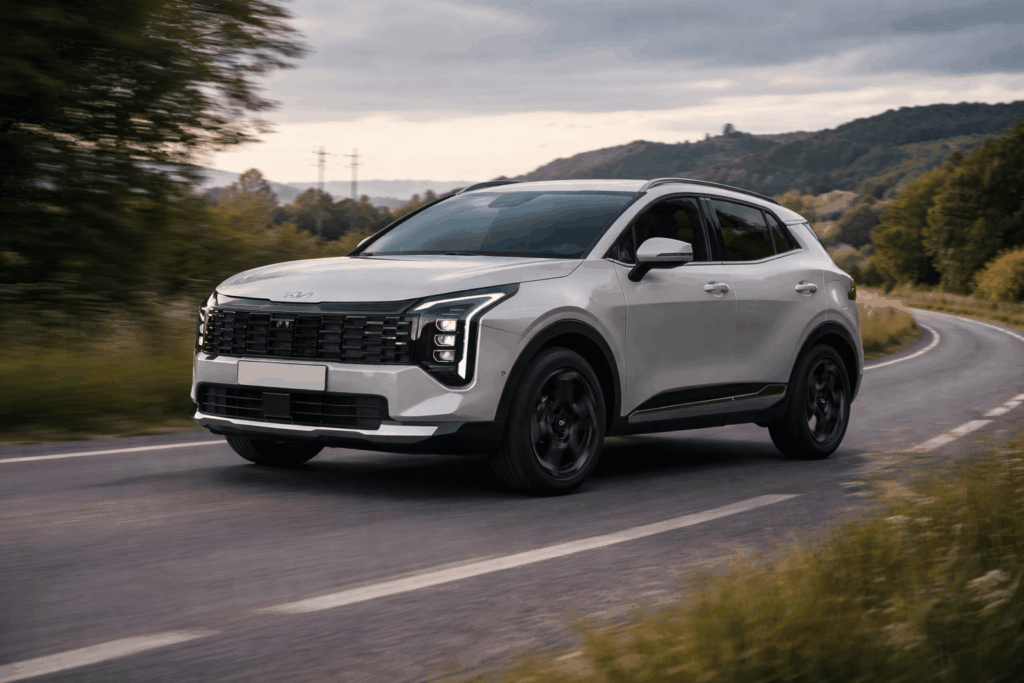
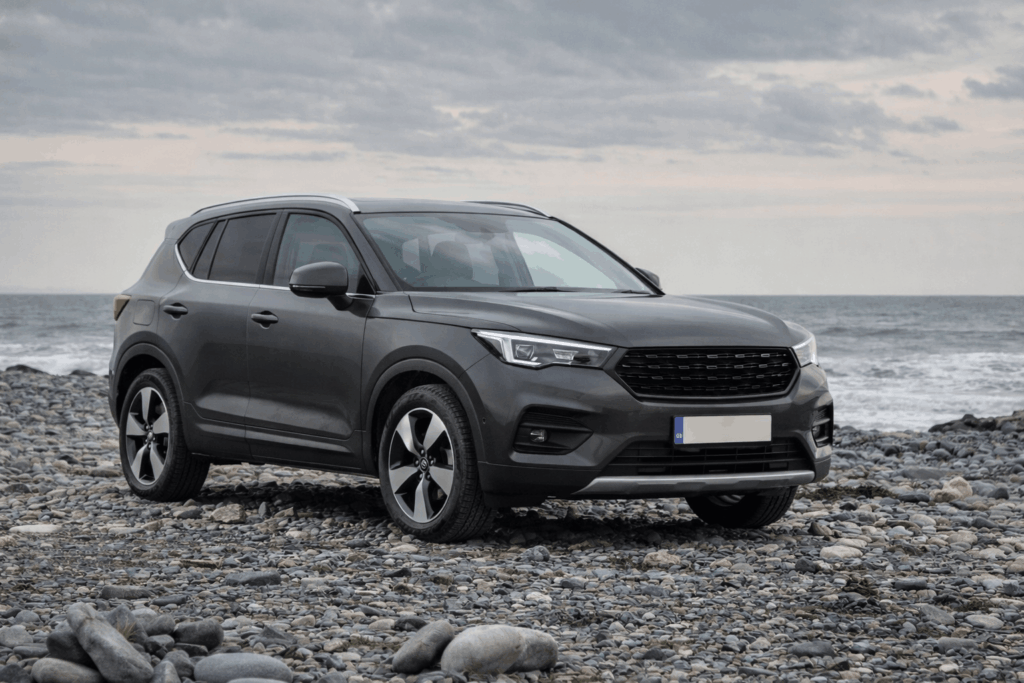
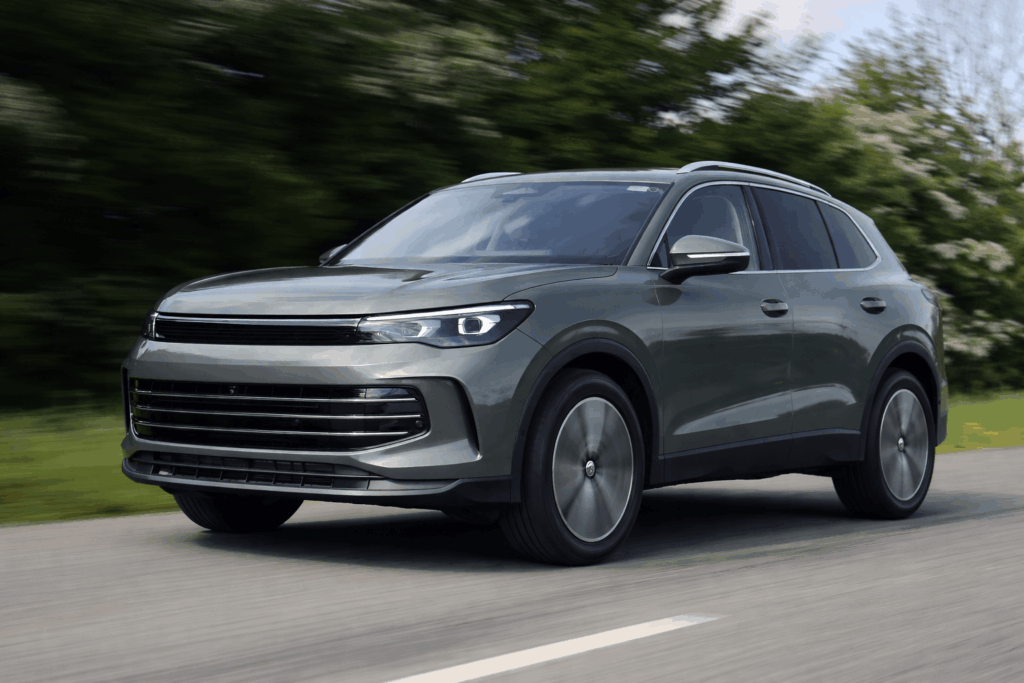
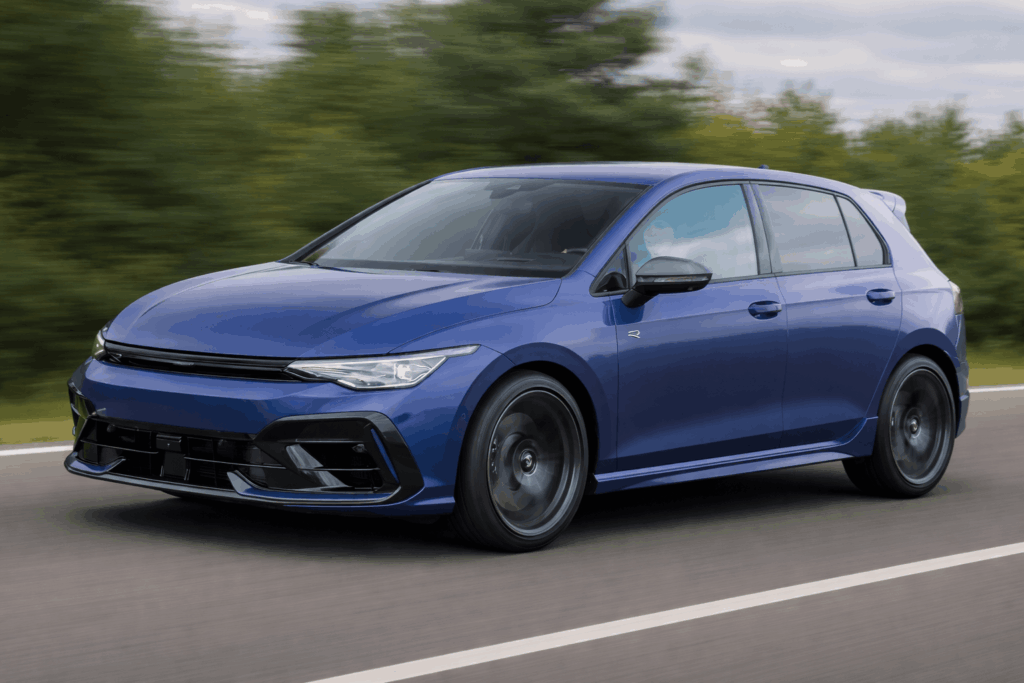 If you’re looking at used Golfs and wondering whether you can actually afford one, and whether you’d get approved, you’re in the right place. The Golf has a reputation for holding its value, which is great news if you own one, and slightly less great news if you’re trying to buy one on a budget. But a used Golf on finance is more achievable than most people assume, even if your credit history isn’t spotless. This guide covers what you’ll actually pay each month, which models are worth targeting, and how to get approved.